Batik Print vs Ajrakh Print: Spot the Difference Before You Buy
By Shalini Bhatheja
Batik print uses wax-resist dyeing to create soft, marbled patterns, while Ajrakh print relies on hand block printing with natural dyes to create sharp, geometric motifs. If you have ever picked up two kurtas and struggled to tell which craft made which, you are not alone.
Both prints come from India's rich textile heritage, both use natural dyes, and both look stunning on ethnic wear. But they are made differently, they look different up close, and they suit different occasions. Here is how to tell them apart before you add one to your cart.
Batik is a wax-resist dyeing technique. Artisans apply hot wax to fabric in specific patterns, then dip the cloth into dye. The waxed areas resist the colour, leaving behind the original fabric tone once the wax is removed.
This process is repeated in layers, sometimes with the wax deliberately cracked before dyeing. That cracking is what gives batik print its signature look: fine, web-like veins running through the pattern, almost like a watercolour with a crackle finish.
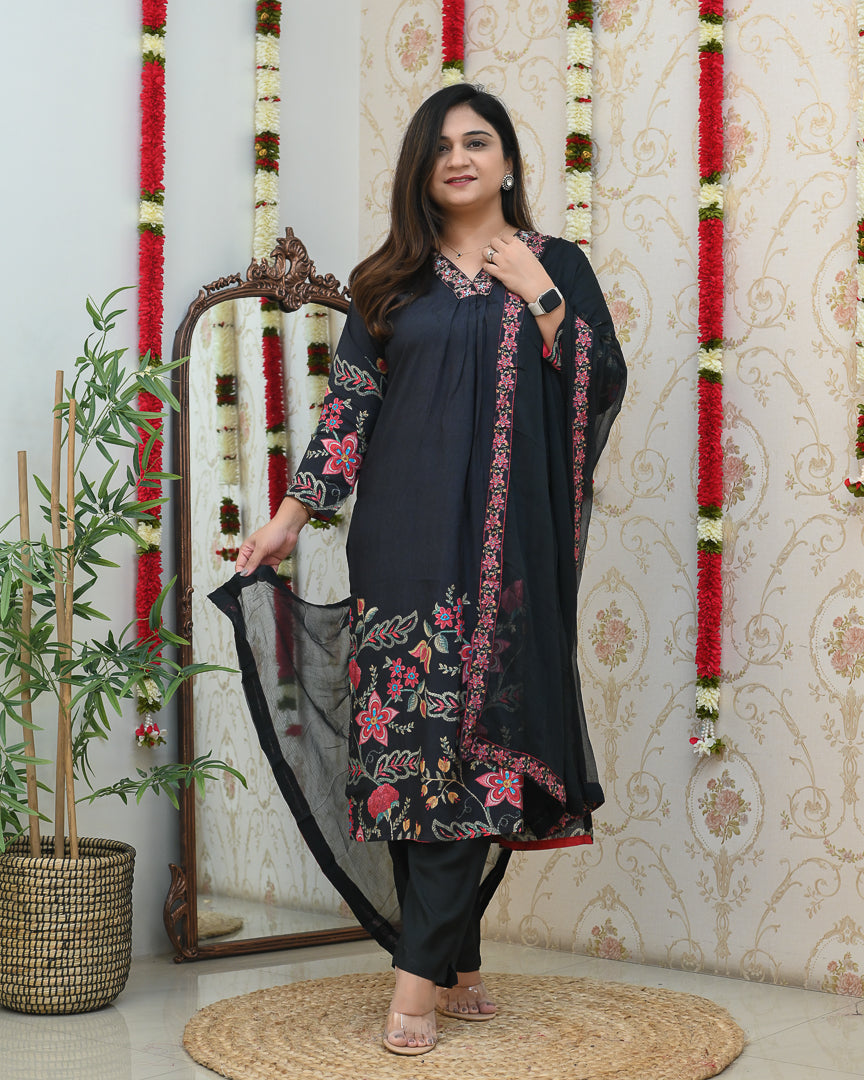
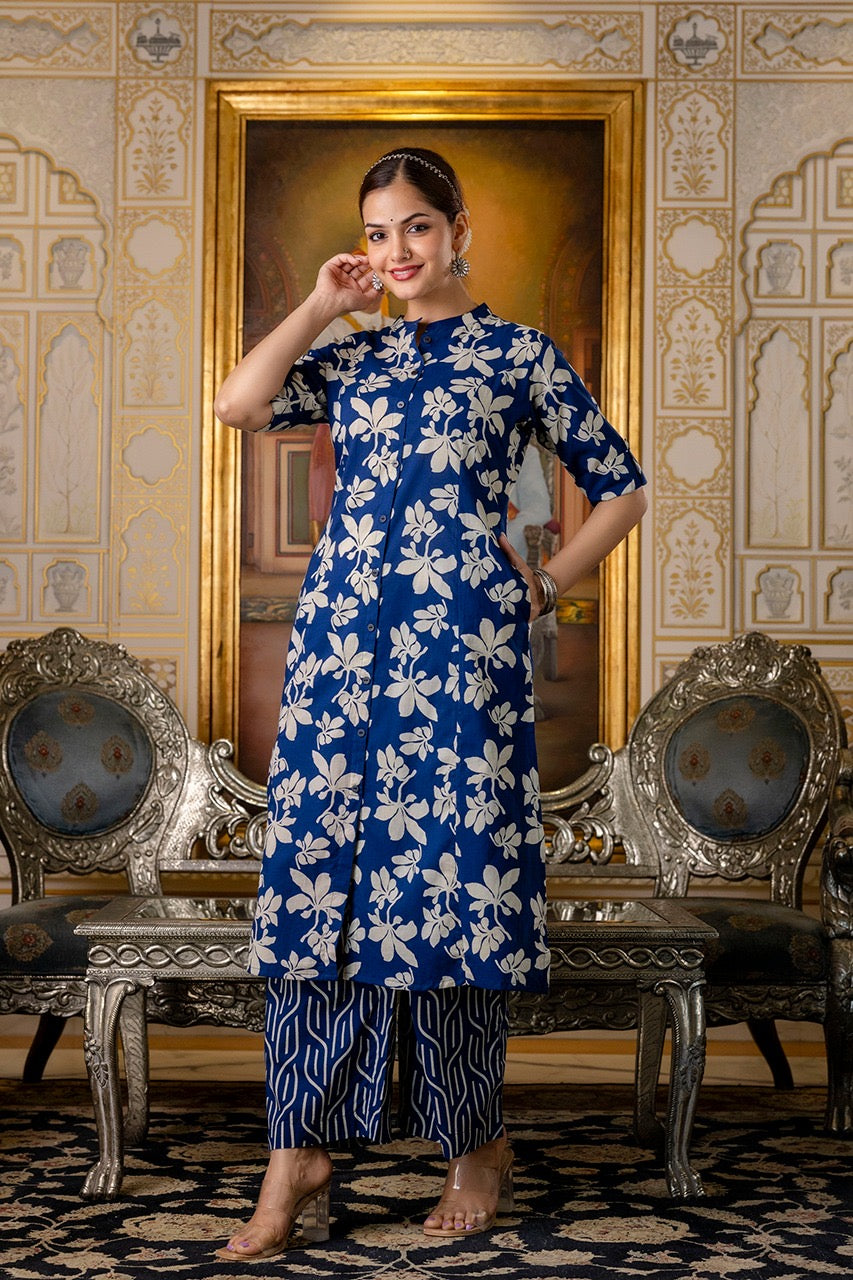
Batik is not native to Rajasthan. It has roots in Indonesia and reached India through trade. Still, Indian artisans have adapted it beautifully, especially in cotton and rayon batik print suit sets that feel light and breezy for everyday wear.
What Is Ajrakh Print?
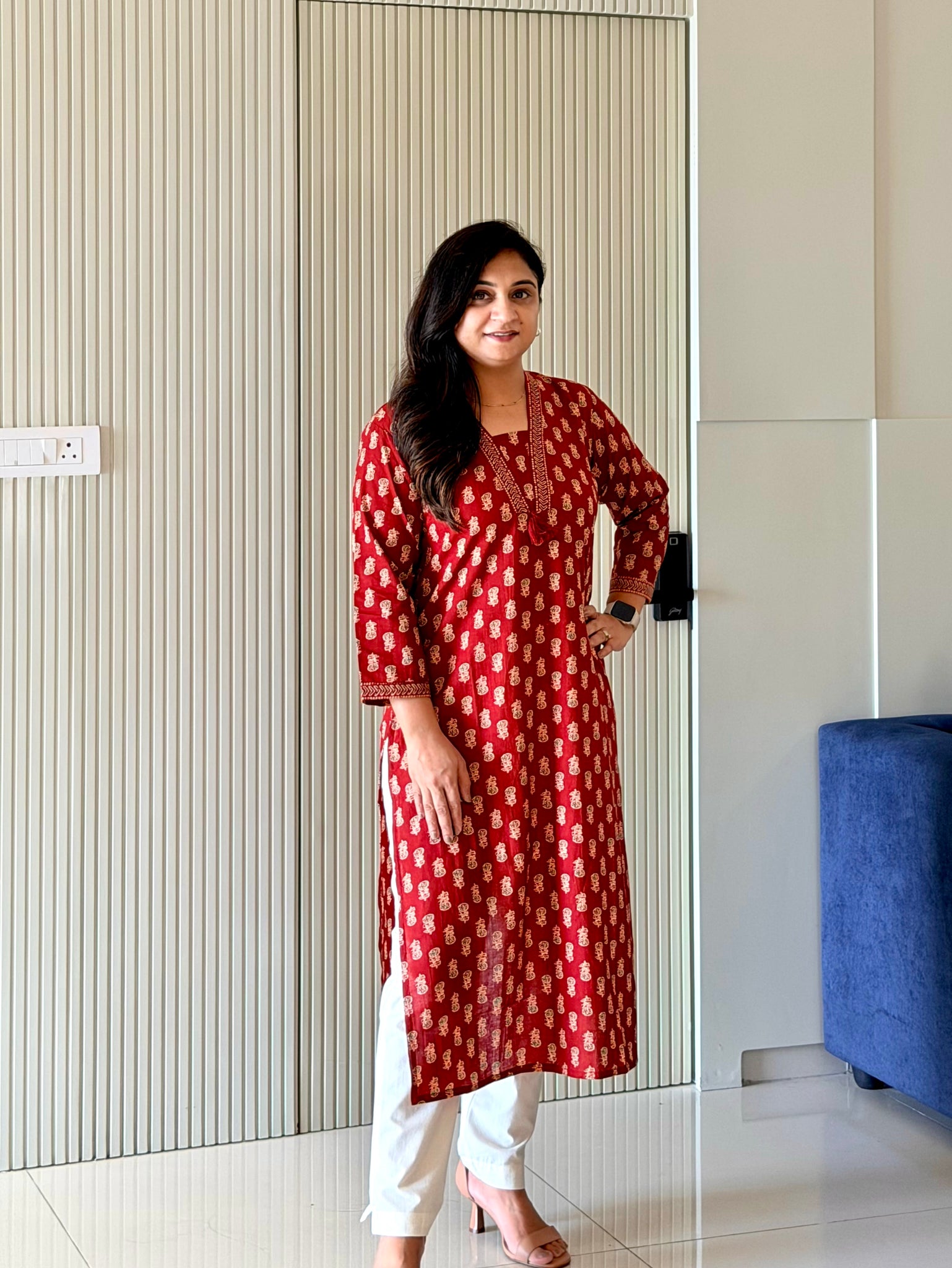
Ajrakh is a hand-block printing technique, traditionally practised in Kutch and parts of Rajasthan and Sindh. Wooden blocks, carved with intricate motifs, are dipped in natural dye and stamped onto fabric by hand, layer by layer.
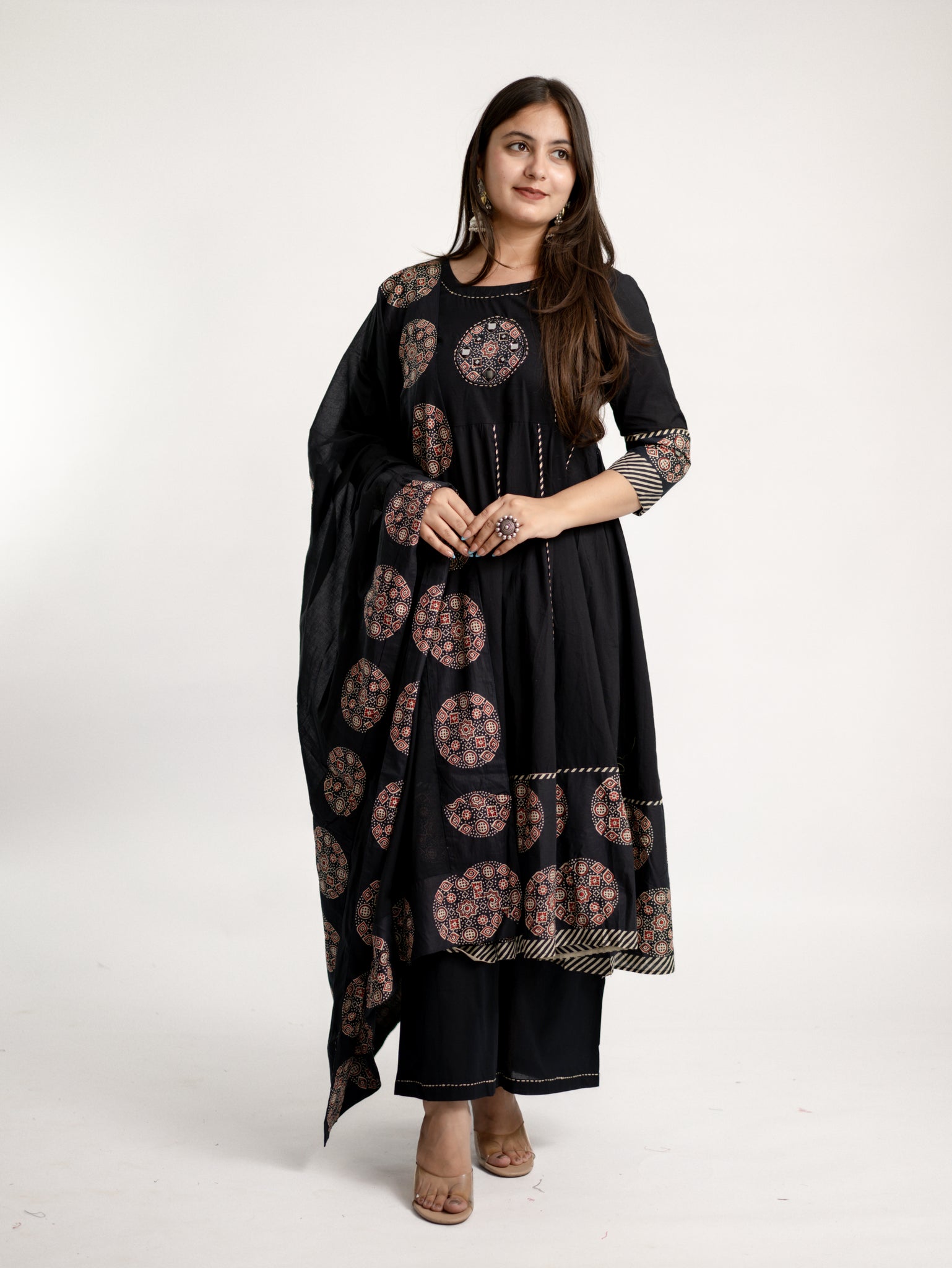
Each color in an Ajrakh design goes through a separate printing and dyeing stage, often involving indigo, madder root, and iron. This is why authentic Ajrakh pieces can take several days to complete. The result is a print with crisp, symmetrical, geometric patterns, usually in deep indigo blues, rust reds, and black.
Like Ajrakh and Kalamkari, batik belongs to a larger family of India's traditional textile arts, but each has its own distinct process and visual signature. Kalamkari uses a pen or "kalam" for hand-painted or block-printed storytelling motifs, while Ajrakh sticks to structured, repeating geometry. Knowing this helps you shop with more confidence, especially if you are building a wardrobe around handcrafted ethnic wear.
Both prints work beautifully in kurta sets, but they lend themselves to slightly different styling.
An ajrakh print kurti pairs well with solid-colored bottoms like straight pants or palazzos, letting the geometric print take centre stage. Add oxidized silver jewellery and juttis for a look that feels rooted and effortless.
A batik piece works nicely with minimal accessories since the print itself already has a lot of visual movement. Think simple gold studs, a sleek bun, and comfortable footwear for all-day wear.
Which One Should You Choose?
If you prefer bold, structured patterns with a rich cultural story, Ajrakh is your print. If you are drawn to softer, more fluid designs with a relaxed, artistic feel, Batik will suit you better.
Both are excellent choices for everyday wear, office days, or casual festive occasions. Neither is "better" than the other; it really comes down to your personal style.
Natural dyes need a little extra care, especially in the first few washes:
Wash separately in cold water for the first two washes
Use a mild detergent and avoid soaking
Dry in shade to protect the colour and pattern
Iron on low heat for a crisp finish
Mild colour bleeding in early washes is completely normal for authentic hand-dyed fabrics. It is a sign of natural dye, not a defect.
Frequently Asked Questions
Q. Is Ajrakh print handmade?
Yes, authentic Ajrakh is hand block printed using carved wooden blocks and natural dyes, often taking several days to complete.
Q. Does Batik print fade after washing?
Batik can show slight fading with age since it is dye-based, but proper cold-water washing helps the colour last longer.
Q. Which print is better for summer wear?
Both work well, but lightweight cotton or rayon batik print suits are especially breathable for hot, humid days.
Q. Can Ajrakh and Kalamkari be used in the same outfit?
Yes, some designers combine ajrakh and kalamkari elements in a single piece, though traditionally they are distinct crafts with different techniques.
Q. How do I know if a print is a genuine hand block print?
Genuine hand block prints often show slight irregularities in pattern alignment since each stamp is applied by hand, unlike machine prints, which look perfectly uniform.
Final Thoughts
At the end of the day, both Ajrakh and Batik carry centuries of craft behind every motif, and neither print is a "wrong" choice. Ajrakh brings structure and heritage with its bold geometry, while Batik brings a softer, artistic flow that feels effortless to wear.
The real trick is buying with your eyes open. Once you know the process behind each print, you will spot the difference in seconds, whether you are shopping online or holding the fabric in your hands.
Take your time, check the fabric, and pick the print that matches how you want to feel that day. Ready to bring one home? Explore handcrafted Ajrakh and Batik pieces at The Jaipur Studioand find the one that speaks to you.
Link copied
About the Author
Shalini Bhatheja
Shalini Bhatheja is an Indian fashion entrepreneur who turned her lifelong passion for design into a purpose by launching The Jaipur Studio in 2018. Rooted in her Rajasthani heritage, she started the company as a small trio selling ethnic wear at local residential stalls before scaling it into a thriving digital and physical retail brand. Her mission focuses on delivering affordable, handcrafted elegance to the modern Indian woman while providing sustainable livelihoods to traditional local artisans.