
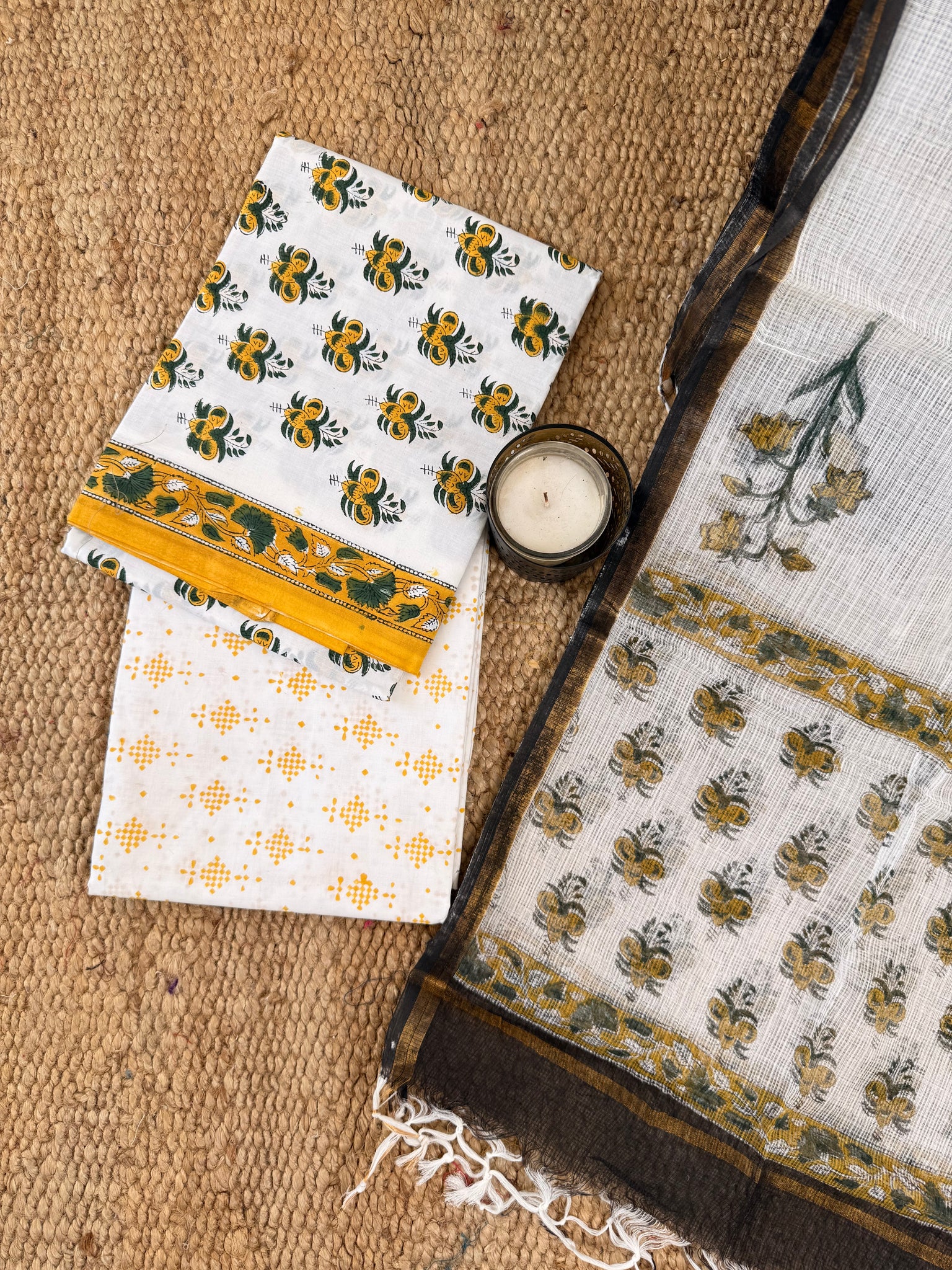
How to Get an Unstitched Suit Set Tailored: A Step-by-Step Guide
To get an unstitched suit set tailored perfectly, you need accurate measurements, the right design choices, and a skilled tailor who can turn your fabric into a well-fitted outfit. While the process may seem overwhelming at first, following the right steps ensures your suit looks and feels exactly the way you imagined. From selecting the ideal silhouette to finalising the stitching details, every decision contributes to the finished look. At The Jaipur Studio, our thoughtfully designed unstitched suit sets give you the freedom to create clothing that's tailored to your style and fit. This step-by-step guide will walk you through the entire tailoring process, helping you achieve a beautifully stitched suit with confidence.
Here's exactly how to go from fabric to finished outfit, without any guesswork.
Why Unstitched Suits Are Worth the Extra Effort
Unstitched sets aren't just for people who love DIY fashion. They're for anyone who wants:
- A fit tailored to their exact body, not a standard size chart.
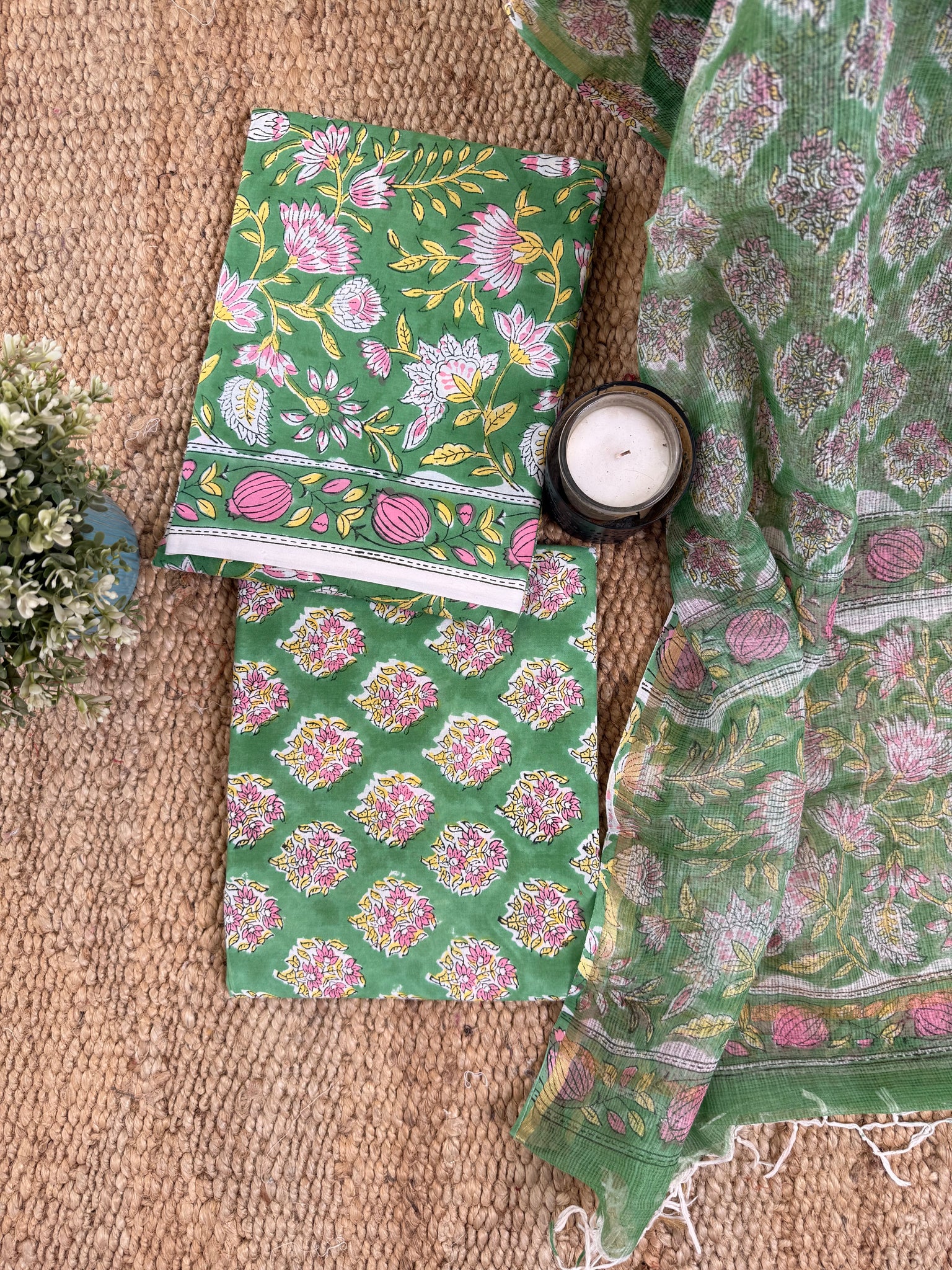
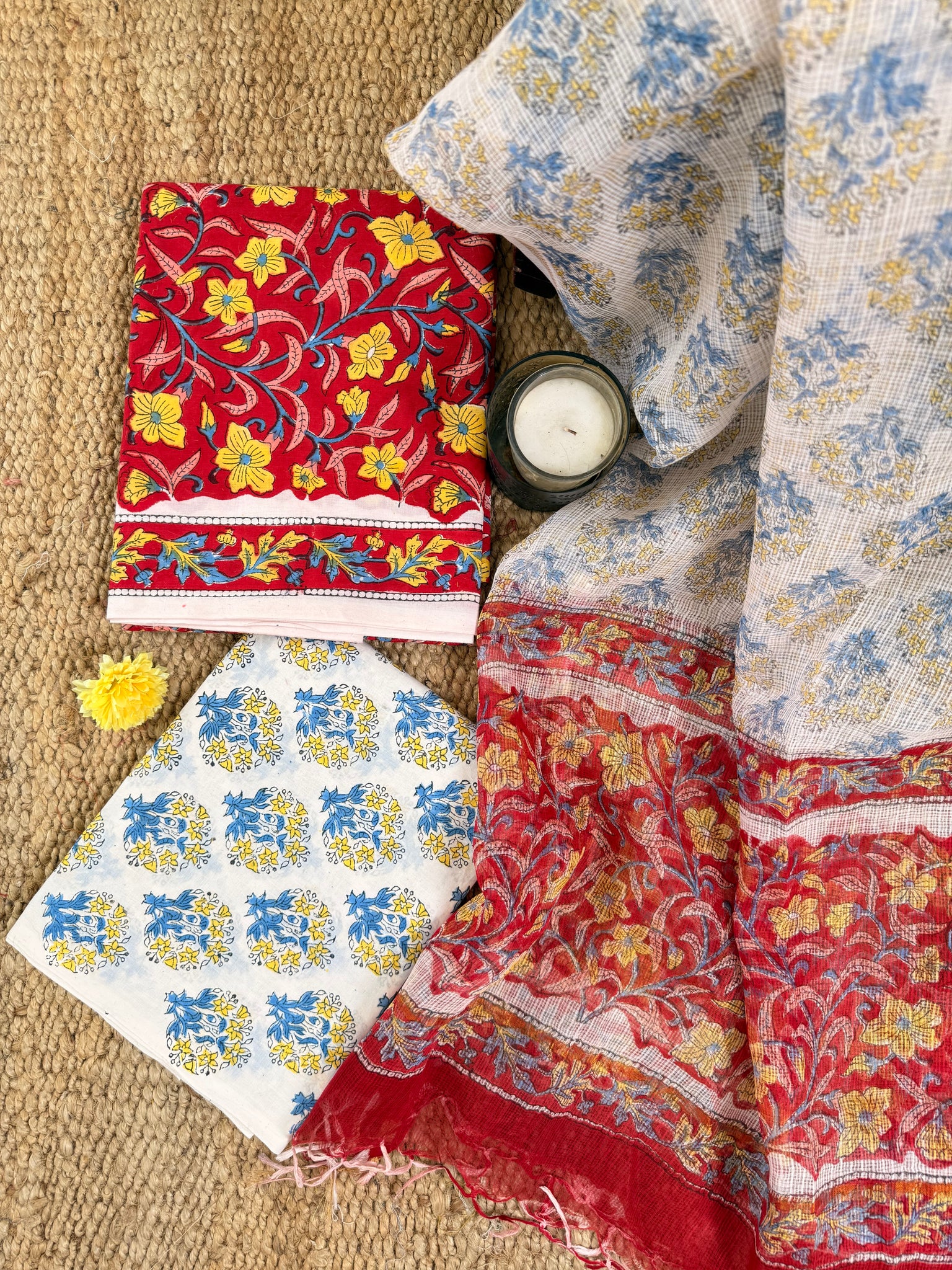
- More fabric control, especially with prints like a floral print unstitched salwar suit set, where you can decide exactly where the motifs fall.
- Longer-lasting wear, since a well-stitched outfit holds its shape far better than machine-cut ready-mades.
The trade-off is simple. You spend a little more time upfront, and you get an outfit that actually fits.
How to Stitch an Unstitched Suit Set in 5 Simple Steps
Step 1: Take Your Measurements Before You Even Touch the Fabric
Don't wait until you're at the tailor's shop to figure out your numbers. Keep a basic set of measurements ready: bust, waist, hip, shoulder, and kurta length. If you're ordering online, most product pages (including ours) list a size chart against these exact points.
Step 2: Pick a Tailor Who Understands the Fabric
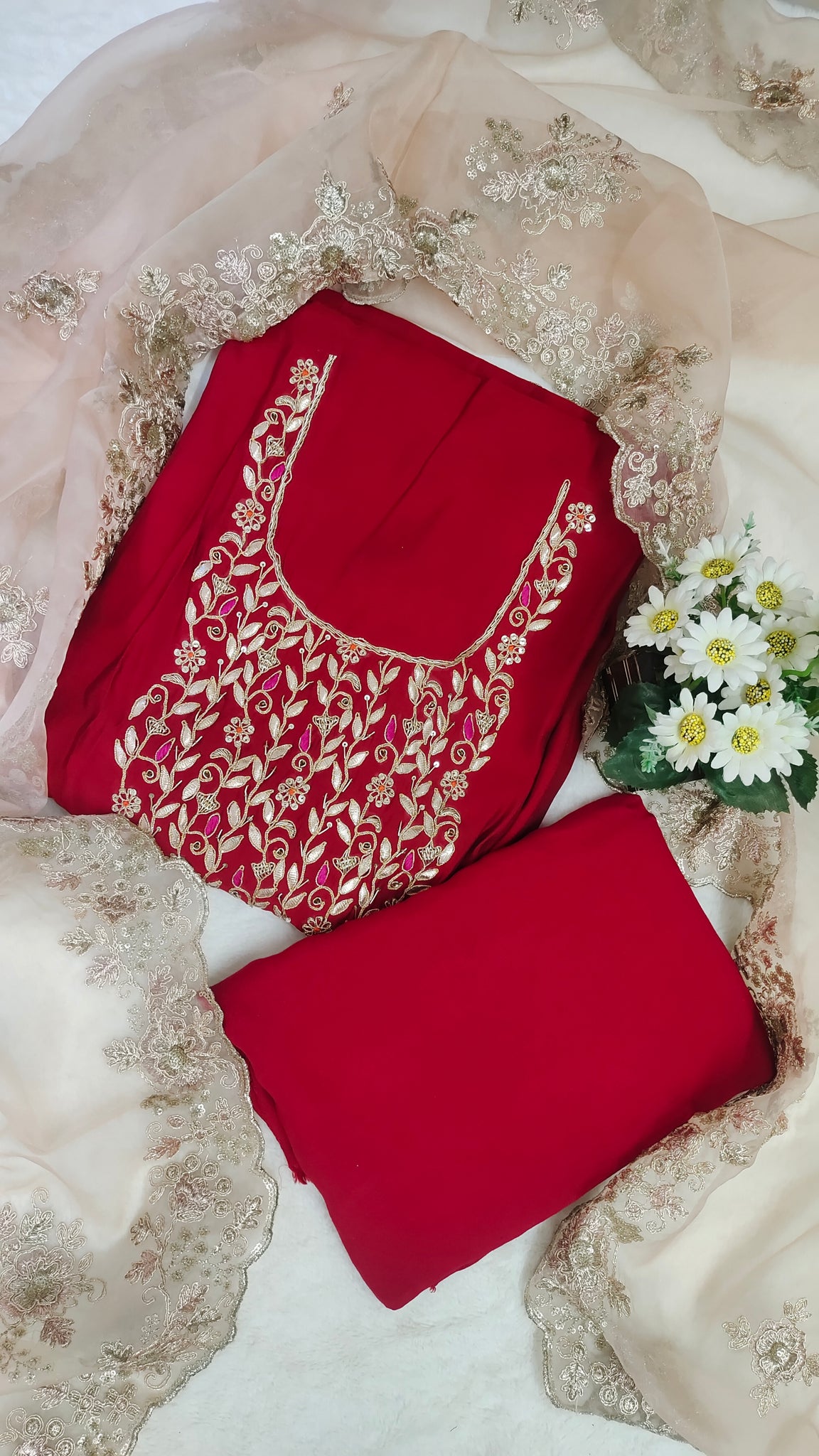
Not every tailor handles every fabric the same way. Cotton and mul cotton are forgiving. Chanderi and Kota Doria need a lighter hand and sharper needles to avoid snagging. If your set has hand embroidery or delicate zari work, like an unstitched kurta set with rose-gold zari booti, mention this upfront so the tailor plans the cutting around the motifs instead of through them.
Step 3: Decide Your Stitching Style Before the First Cut
Before any fabric gets touched, lock in these details:
- Neckline (round, boat, V-neck, or keyhole)
- Sleeve length (full, three-quarter, or short)
- Kurta silhouette (straight, A-line, or Anarkali flare)
- Bottom style (straight pant, palazzo, or sharara)
Bring a reference photo if you have one. It saves time and effort and avoids fit surprises later.
Step 4: Never Skip the First Fitting
This is the step people rush the most, and it's the one that matters most. A first fitting, before the final stitches go in, lets the tailor adjust length, armhole, and drape while there's still room to fix things.
If something feels tight at the shoulder or loose at the waist, say so now. Once the final seams are locked, changes get harder, and the finish suffers.
Step 5: Finish With the Small Details
The last stretch is where a suit either looks tailored or homemade. Check these before you take the outfit home:
- Even hemlines with no visible puckering
- Matching thread colour on all seams
- Secure lining, especially on sheer or lightweight fabrics
- A pressed, wrinkle-free finish
These details take an extra day, but they're the difference between an outfit that looks stitched and one that looks styled.
Ready to pick your next unstitched piece? Browse our unstitched suit sets and start with a fabric you'll actually enjoy getting tailored.
Frequently Asked Questions
Q. How much fabric do I need for a suit stitching order?
Most unstitched suit sets come pre-measured for an average kurta, bottom, and dupatta length, but always confirm with your tailor if you're tall or need extra flare.
Q. Can I get an unstitched suit stitched in a different style than shown online?
Yes, the fabric is yours to customize. Just make sure your tailor accounts for embroidery placement before cutting.
Q. How long does suit stitching usually take?
A standard three-piece set typically takes 5 to 7 days, longer if it involves heavy embroidery or zari work.
Q. Do I need a fitting before the final stitching?
Always. A first fitting catches sizing issues early and saves you from a finished outfit that doesn't sit right.
Q. Is unstitched fabric more prone to shrinkage after stitching?
Natural fabrics like cotton and mul cotton can shrink slightly. It's best to pre-wash the fabric before handing it to your tailor.
Final Thoughts
Whether you're picking a subtle print or something as detailed as an unstitched kurta set with rose-gold zari booti, getting the stitching right is what turns fabric into a wardrobe favourite. At The Jaipur Studio, every unstitched piece is cut with exactly this kind of tailoring in mind.


