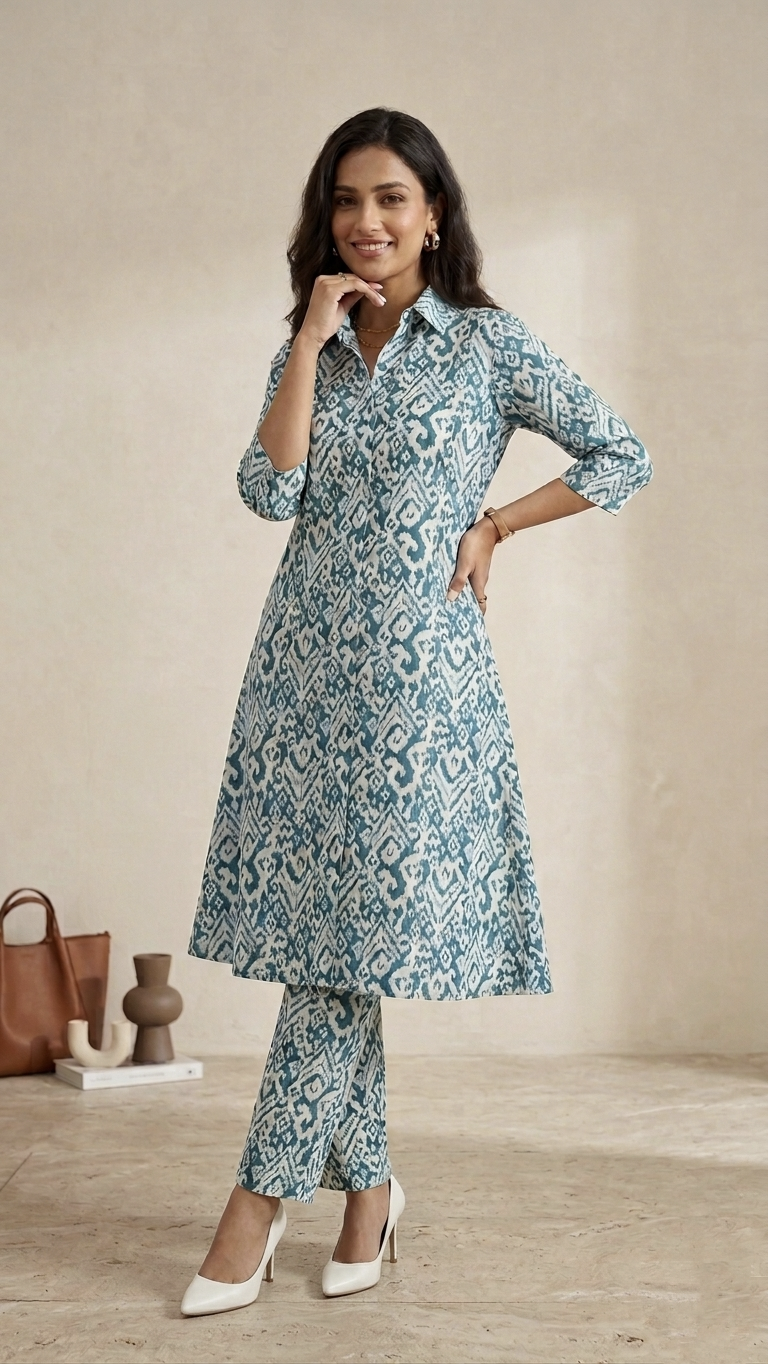
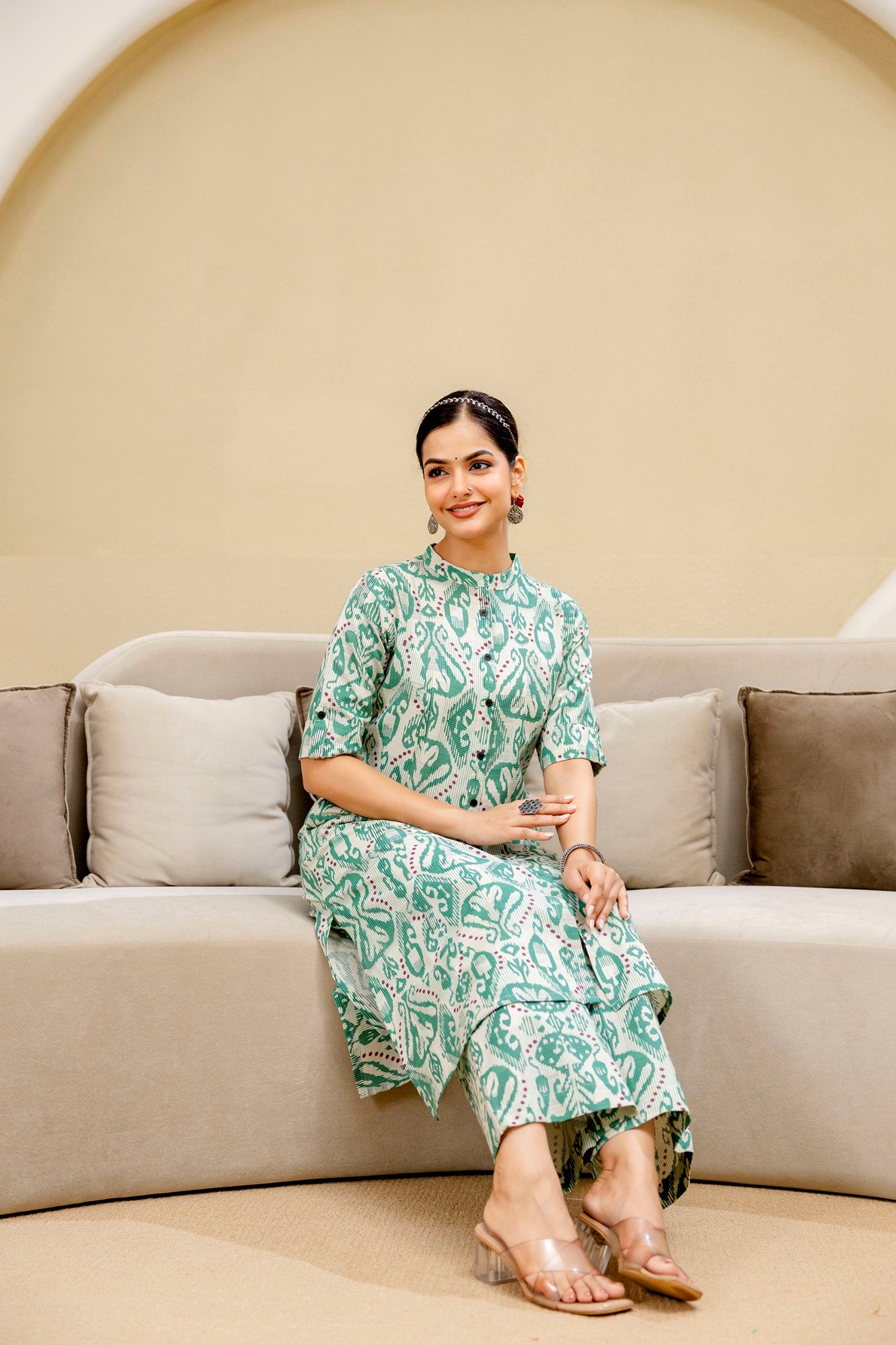
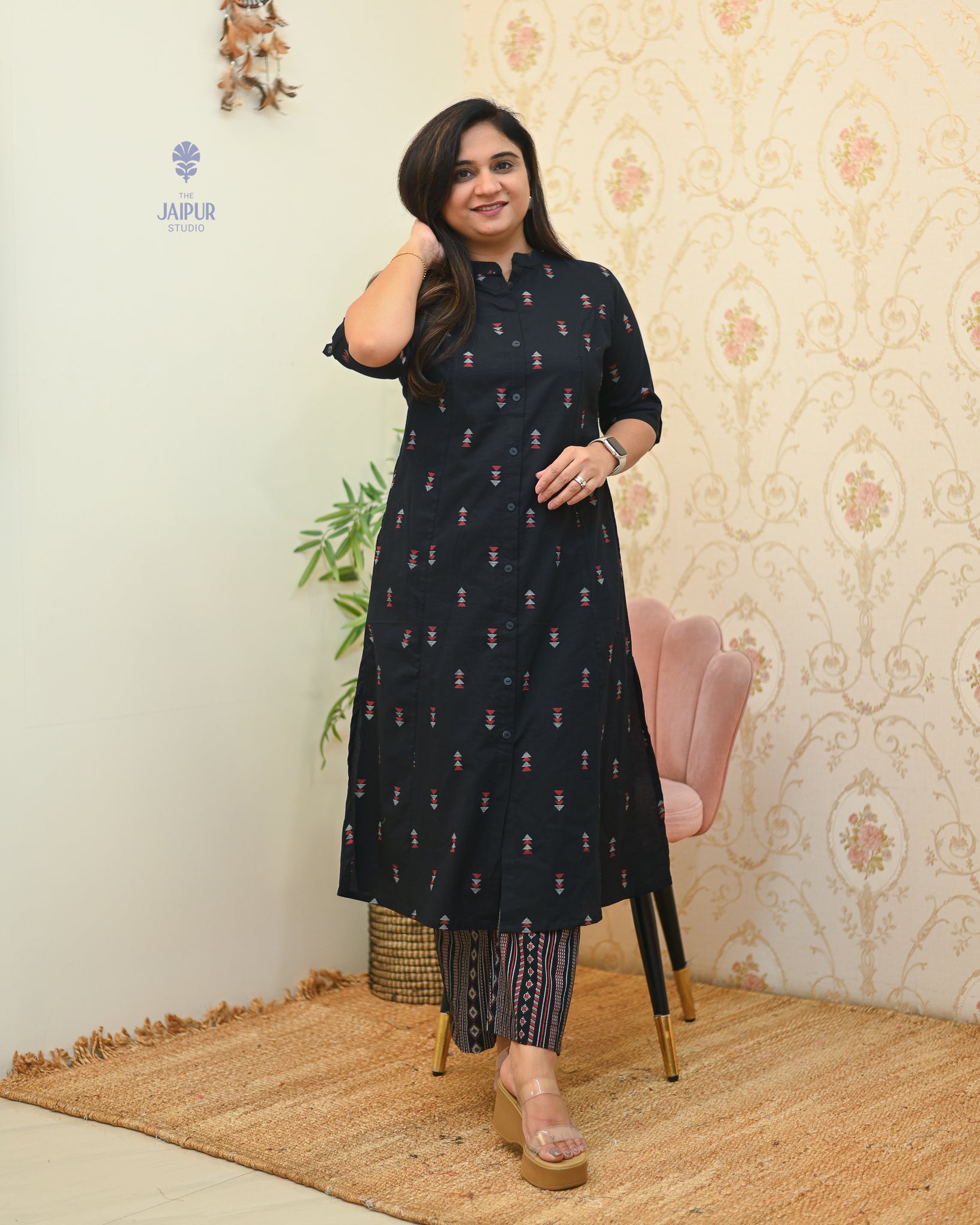
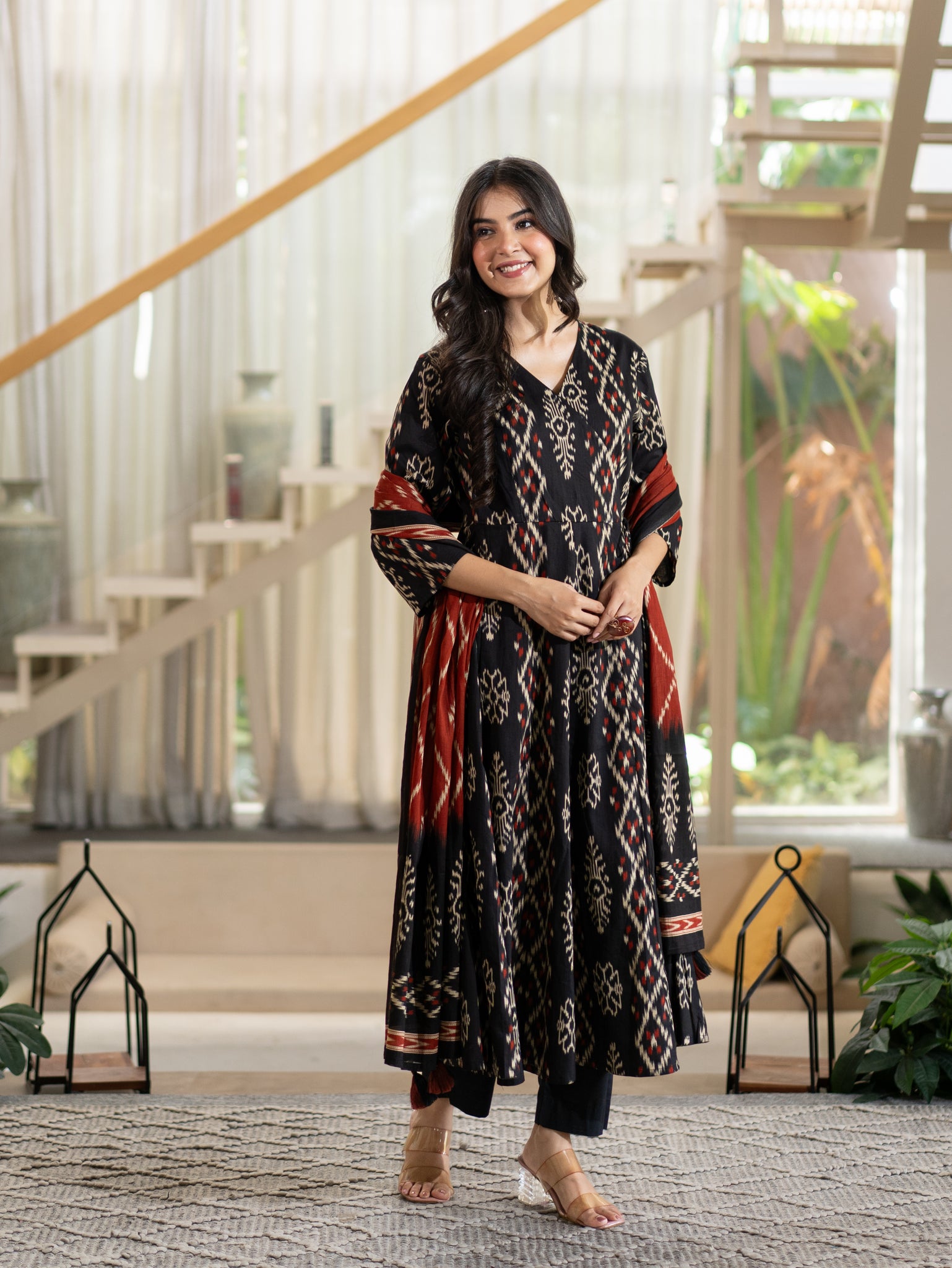
Ikkat (or ikat) refers to a traditional resist-dyeing textile technique where yarns are tied and dyed before weaving, creating the soft, blurred pattern edges that make this fabric instantly recognizable. If you've ever spotted a kurta with a slightly hazy, geometric pattern that looks handmade rather than printed, you were probably looking at an ikat pattern.
This craft has been part of India's textile heritage for centuries, and it's having a real moment right now. Fashion blogs, Pinterest boards, and Instagram feeds are full of it. But before you add another kurta to your closet, it helps to actually understand what makes this print special and how to wear it well.
Let's break it down.
What Makes Ikkat Print Different From Regular Prints
Most prints are applied to fabric after it's woven. Ikkat works the opposite way.
Artisans tie sections of yarn tightly with thread, dip them in dye, then untie and repeat the process for each colour. Only after this dyeing is complete does the actual weaving begin. The result is a print with soft, feathered edges instead of crisp lines, since the pattern is literally built into the thread.
This is why:
-
No two ikkat pieces are ever fully identical, even within the same batch
-
The pattern often looks slightly blurred or "melted" at the edges, which is a mark of authenticity, not a flaw
-
The fabric tends to feel more textured and breathable compared to machine-printed cotton
If you're shopping for ikkat cotton kurta pieces, this handwoven texture is exactly what you're paying for.
Why Ikkat Suits Work for Almost Every Occasion
One reason ikkat has stayed relevant for so long is its sheer versatility. Ikkat suits and sets move easily between casual days and slightly dressed-up occasions, which is rare for a single print.
Here's where it fits naturally:
-
Everyday wear: Cotton ikkat kurtis are lightweight and breathable, perfect for daily errands or work
-
Office days: A structured ikkat kurta with straight pants reads as smart-casual without trying too hard
-
Casual outings: Pair it with jhumkas and flats for a relaxed weekend look
-
Small festive gatherings: Choose richer colour combinations like maroon, mustard, or indigo for a subtly festive feel
Because ikat pattern designs are earthy and geometric rather than loud, they pair well with minimal jewellery and clean silhouettes.
Looking for a place to start? Browse our handpicked Ikkat collection and see the weave up close before you decide.
How to Style Ikkat Cotton Kurtis for Different Looks
Styling ikkat well comes down to keeping everything else simple. The print already does the heavy lifting.
A few combinations worth trying:
-
Kurta + straight pants + juttis: Classic, comfortable, and works for both college and casual office settings
-
Ikkat short kurtis + denim: A fusion look that feels current without losing the ethnic character of the fabric
-
Ikkat set + statement earrings: Keep the outfit minimal everywhere else and let one accessory stand out
-
Layered with a solid dupatta: A plain dupatta in a contrasting shade balances a busy ikat pattern nicely
If you prefer something more relaxed, a women's kaftan dress in ikkat print is an easy way to wear the fabric without worrying about fit at all. It's forgiving, breathable, and effortless for both home and travel.
Ikkat vs Other Handloom Prints: What Sets It Apart
People often confuse ikkat with bandhani or ajrakh, but the techniques are quite different.
-
Bandhani uses tie-dye on finished fabric, creating small dot patterns
-
Ajrakh uses hand block printing with natural dyes, resulting in sharp, repetitive motifs
-
Ikkat dyes the yarn before weaving, which is why its patterns look woven into the cloth rather than sitting on top of it
This distinction matters if you're building a wardrobe with different textures. A short tops for women collection that mixes ikkat with block prints or bandhani gives you variety without repeating the same visual pattern twice.
Caring for Ikkat Fabric the Right Way
Ikkat is typically woven from cotton, so it needs gentle handling to stay vibrant for years.
Quick care tips:
-
Hand wash separately in cold water for the first two to three washes
-
Avoid harsh detergents, especially on hand-dyed pieces
-
Dry in shade rather than direct sunlight to protect the colour
-
Iron on low to medium heat
Minor colour bleeding in early washes is normal for naturally dyed fabric and isn't a sign of poor quality.
FAQs
Q. What is ikkat print and how is it made?
Ikkat print is created by tie-dyeing yarns before weaving, which gives the fabric its signature soft-edged, slightly blurred pattern.
Q. Is ikkat fabric suitable for daily wear?
Yes, ikkat cotton is lightweight and breathable, making it ideal for everyday kurtas, short tops, and casual sets.
Q. How is ikkat different from bandhani or ajrakh?
Ikkat dyes the yarn before weaving, while bandhani uses tie-dye on finished fabric and ajrakh uses hand block printing, resulting in three distinct visual textures.
Q. Will the colour of ikkat fabric fade after washing?
Some natural colour bleeding can occur in the first few washes. Washing separately in cold water helps the colour settle without affecting the print quality.
Q. Can ikkat print be worn for festive occasions?
Yes, choosing richer shades like maroon, indigo, or mustard in an ikkat set works well for smaller festive gatherings and daytime celebrations.
Final Thoughts
Ikkat print isn't just another trend passing through your feed. It's a centuries-old weaving tradition that happens to look effortlessly modern today. Whether you pick a structured kurta for women or something as relaxed as a kaftan, you're wearing a piece of craft history with every wear, and at The Jaipur Studio, that history is woven into everything we make.