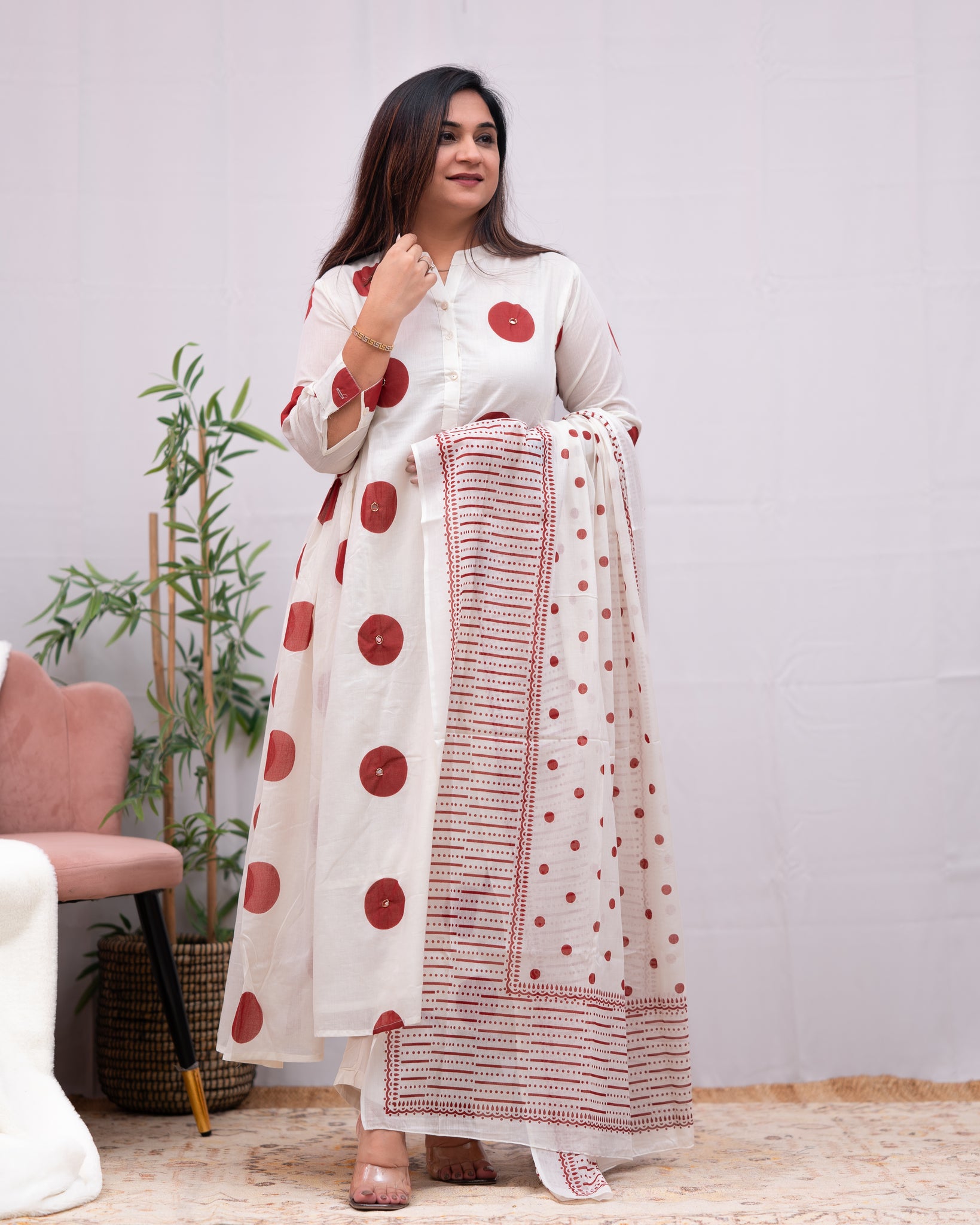
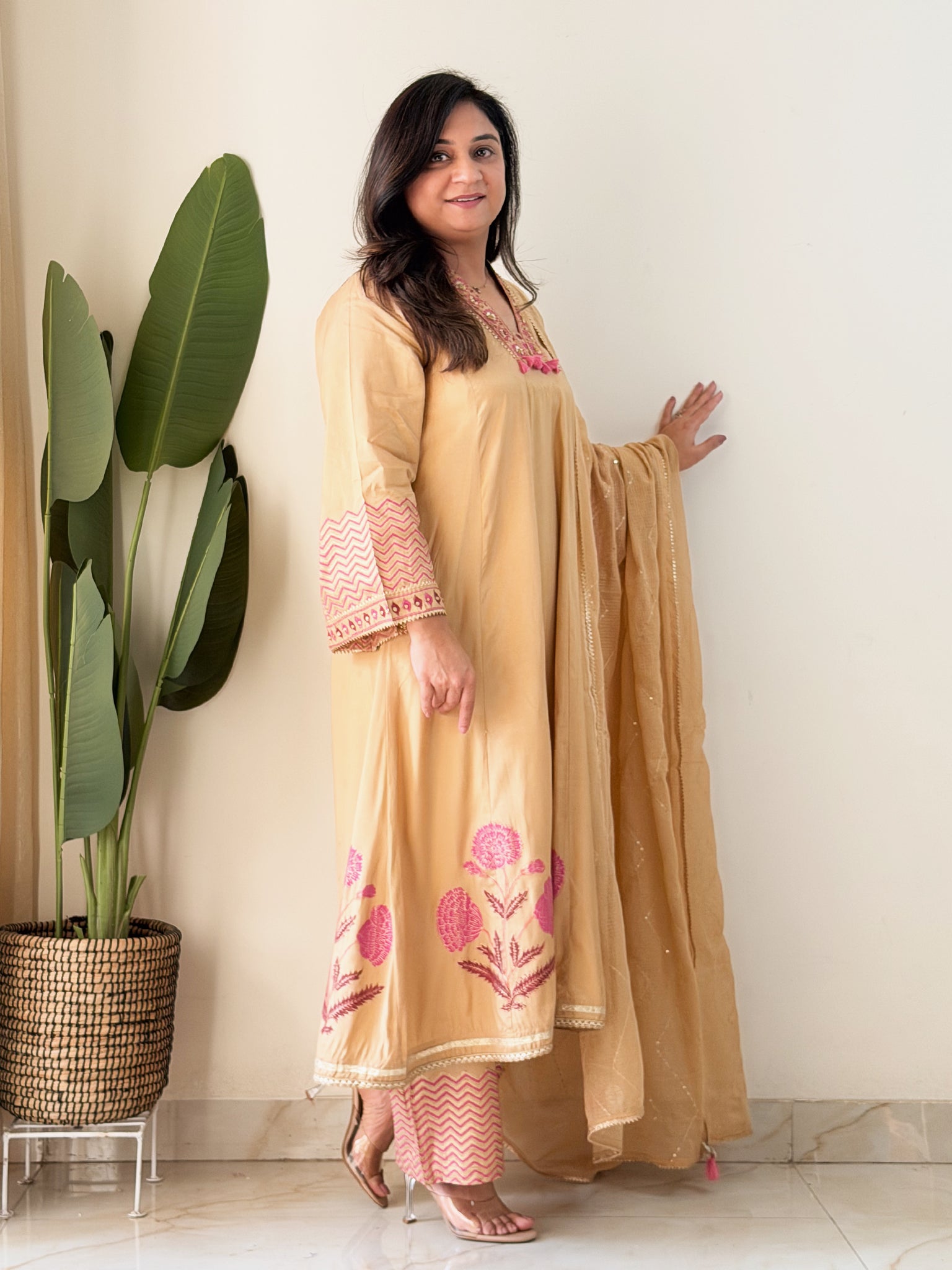
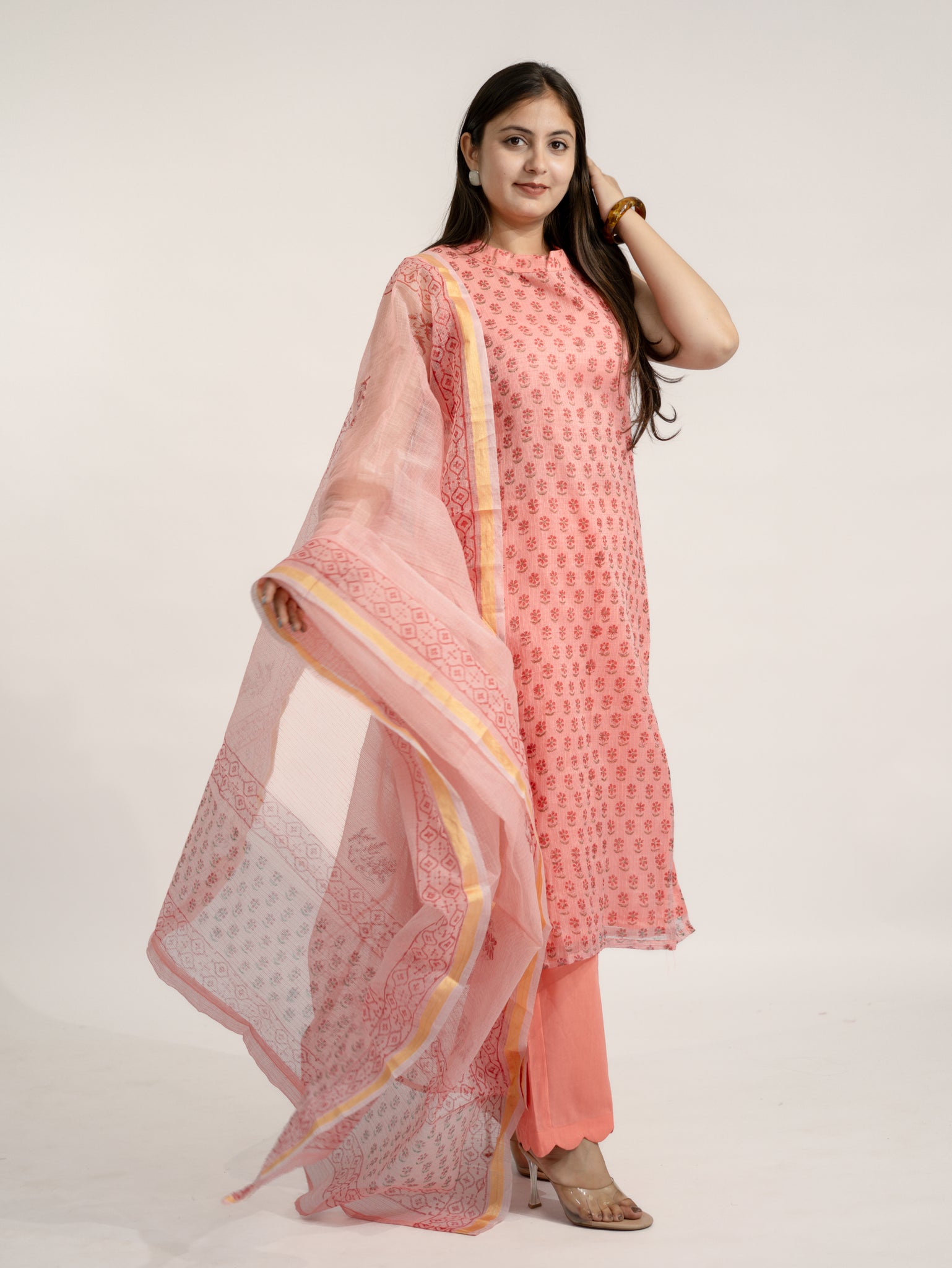
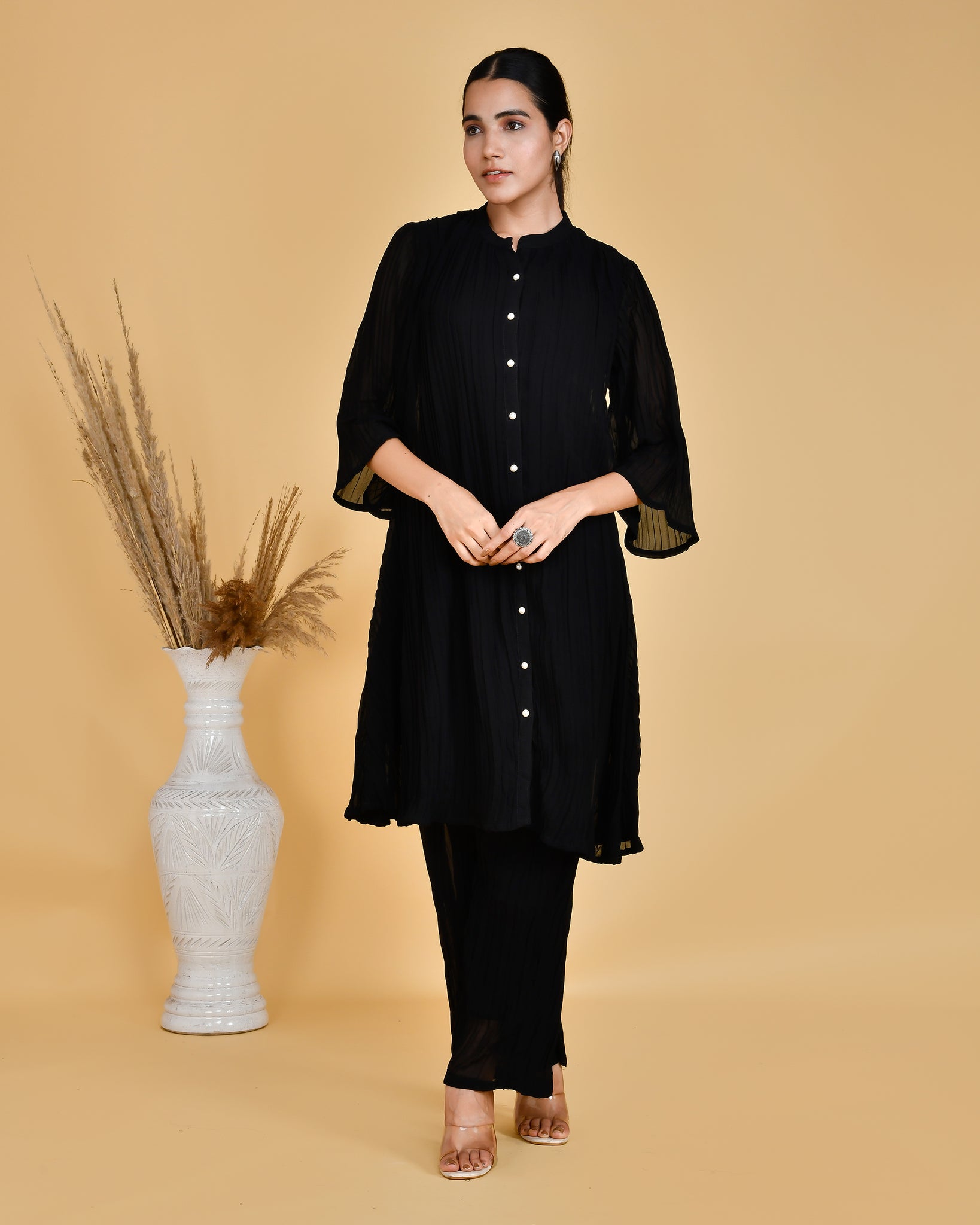
There is a particular kind of outfit that solves most of your dressing problems in one go. It looks like you made an effort. It doesn't make you regret wearing it by noon. It works for the family lunch and the evening function, with just a change of earrings in between.
If you haven't found that outfit yet, you haven't tried the right kaftan set for women in India in 2026.
This isn't a trend piece. Kaftans have been around for centuries. What's changed is how Indian women are wearing them now and how much room this silhouette leaves for beautiful handcraft, real fabric, and dressing that actually reflects who you are.
This guide covers everything: what a kaftan set actually is, how it's different from a kurta, when to wear it, and how to style it so it doesn't look like an afterthought.
What Is a Kaftan Set? (And What Makes It Different)
A kaftan set is a two-piece ethnic outfit built around a loose, wide-cut kaftan top or full-length dress, paired with matching or complementary bottoms, usually straight pants, palazzos, or a coordinated dupatta.
The silhouette is the thing. A kaftan drapes away from the body instead of following its shape. There's no cinching at the waist, no structured seam pulling the fabric inward. It sits wide and free, with enough room to move, breathe, and exist comfortably through a full day.
It is not the same as a kaftan dress, which is one single piece. The set format gives you more layering options and, honestly, more versatility across different occasions.
What makes the Indian interpretation of this silhouette special is the craft layered onto it. Ajrakh block prints. Leheriya tie-dye. Mirror embroidery. Hand-woven textures from Jaipur's artisan community. These are not mass-produced patterns; they are techniques passed down through generations, and they turn a simple silhouette into something worth wearing.
Kaftan vs Kurta: What's Actually the Difference?
People mix these two up constantly, so let's settle it.
|
Kaftan Set |
Kurta Set |
| Silhouette |
Wide, flowing, relaxed drape |
Straighter, more structured |
| Fit |
Non-fitted, sits away from the body |
Semi-fitted to fitted |
| Sleeve Style |
Often bat-wing, dolman, or wide |
Standard set-in or three-quarter |
| Occasion Range |
Casual to semi-formal |
Casual to formal |
| Overall Feel |
Relaxed, free-spirited |
Composed, put-together |
A kurta pant set for women has a structure. It shapes the silhouette, works across formal occasions, and feels more tailored. A kaftan set trades that tailor for movement and ease.
Neither is the better choice; they answer different questions. Reach for a kurta when you need to feel sharp. Reach for a kaftan when you need to feel free, but still look like you dressed with intention.
Best Occasions to Wear a Kaftan in India
This is the question most women get stuck on. The honest answer: more occasions than you think.
Everyday Wear
A plain or simply printed kaftan set in mul cotton is one of the most honest daily outfits you can own. It doesn't pretend to be anything. Wear it with flat sandals and small earrings, and you're ready without having tried very hard at all.
Festive and Family Occasions
A kaftan in Ajrakh or Jaipuri print, with a little mirror work, reads as festive without the weight or formality of heavier fabrics. It's what you wear to a puja at a relative's home, or to a family gathering where you want to look nice but not overdressed. For a kaftan for Indian occasions, this is the sweet spot.
Travel and Outings
Among kaftans for women who travel frequently across India, the cotton kaftan set has become something of a go-to. It packs light, doesn't crease the way structured clothes do, and breathes in the heat. It also looks good at 8 AM and still holds up at 8 PM, which is more than most outfits can say.
Wedding Functions: Mehendi and Haldi
Mehendi and Haldi functions have quietly become perfect kaftan territory. The energy is relaxed, the setting is often outdoors, and comfort matters. A bright printed or embroidered kaftan set, styled with oxidised jewellery and kolhapuris, fits right in without looking casual.
For Sangeet, go for heavier, embellished fabric, richer embroidery, and a dupatta draped thoughtfully. The kaftan silhouette can carry it.
How to Style a Kaftan Set So It Looks Like a Real Outfit
Styling a kaftan is mostly about balance. The top is doing a lot visually, wide, flowing, and often printed. Everything else should answer that rather than compete with it.
Get the Bottoms Right First
Slim or straight-cut pants ground the look. They contain the volume of the kaftan top and give the outfit a defined lower half. Wide-leg palazzos can work, but only when the kaftan top is shorter and more cropped; otherwise, everything reads as one large, shapeless mass.
Think About Footwear Before You Think About Jewellery
- Juttis or kolhapuris: Grounded, ethnic, work with almost every print
- Block heels or wedges: Take the kaftan toward semi-formal without much effort
- Embroidered mojaris: Perfect for festive occasions and wedding functions
- Flat sandals: The easiest choice for travel days and summer afternoons
On Jewellery: Less Usually Works Better
Bold prints carry their own personality. A heavily printed kaftan with loud statement jewellery is usually too much at once. Let the fabric speak. One good pair of jhumkas, a few bangles, or a simple gold chain is enough.
For plainer, neutral kaftans, you have more room. That's where you bring out a layered necklace or a heavier earring.
Dupatta: When It Helps and When It Doesn't
Not every kaftan set includes one. Not every occasion needs one. But when you're heading somewhere that calls for a bit more formality, draping a lightweight dupatta over one shoulder immediately shifts the register from casual to occasion-ready without adding actual weight or warmth.
Our kaftan sets are made with the same handcrafted attention that The Jaipur Studio is known for. Each piece carries real print, real fabric, and real craft.
Which Fabric Should You Choose? A Simple Guide
Fabric makes or breaks a kaftan. Get this right, and you'll actually want to wear it. Get it wrong, and it sits in the wardrobe looking unloved.
Right now, as trending ethnic wear for women increasingly leans toward natural fabrics, the kaftan is perfectly positioned. It was always a natural-fabric silhouette.
Mul Cotton
Made for Indian summers. Soft, lightweight, slightly translucent, and genuinely breathable even on the worst humid days. A mul cotton kaftan set is what you wear when the weather is unreasonable, and you still need to look like a person.
Muslin
A touch crisper than mul cotton, and it holds block prints beautifully. Ajrakh and Jaipuri prints on muslin have a richness and depth that's hard to replicate on other fabrics. Works for daily wear and festive occasions.
Kota Doria
Almost weightless. A fine woven texture with a subtle natural sheen. It looks considered without being heavy, which makes it a strong choice for evening occasions and functions where you want something that reads a little more special.
Chiffon and Georgette
More fluid, more dressed-up. These fabrics give the kaftan an elegant, formal quality that works well for sangeet-style events and evening functions. Not the best choice for a practical afternoon in the heat.
If you already wear a cotton kurta for women regularly, moving to a cotton kaftan set will feel completely natural. Same breathability, same easy care, same comfort through a long day. The silhouette is just wider and more relaxed.
FAQs
1. What exactly is a kaftan set for women?
A kaftan set is a two-piece ethnic outfit: a wide, flowing kaftan top or dress paired with coordinated bottoms like pants or palazzos, sometimes with a dupatta. The defining feature is the relaxed, non-fitted silhouette that sits away from the body and allows free movement.
2. Is a kaftan set suitable for Indian weddings and festive occasions?
Yes, very much so. For daytime functions like Mehendi and Haldi, a printed or embroidered kaftan set in a rich fabric is entirely appropriate. For evening events, choose an embellished kaftan in Kota Doria or georgette and style it with good jewellery. The silhouette is flexible enough for most wedding contexts.
3. How to style a kaftan set for everyday wear?
Keep it simple. A block-printed cotton kaftan with straight pants, flat sandals, and small earrings is a complete, easy look. Avoid overloading it with accessories; the print does most of the work already.
4. Which fabric is best for a kaftan set in Indian weather?
Mul cotton and muslin are the best choices for daily wear in India's heat and humidity. Kota Doria works well for special occasions. Chiffon and georgette are better suited for evening events where comfort in the heat is less of a priority.
5. Can I wear a kaftan set to the office or professional settings?
It depends on your workplace, but a solid-coloured or subtly printed kaftan in a structured fabric like muslin, paired with straight pants, can work in a creative or relaxed office environment. For conservative professional settings, a kurta set would be a safer choice.
A Final Word
The kaftan is not a complicated outfit. It doesn't ask much of you. Wear a good fabric, pair it sensibly, and let the craft do the talking.
That's always been the idea at The Jaipur Studio: clothes that work for real women, in real life, made with the craft and care that Jaipur's artisan community has kept alive since 1950.
If you're looking for your next kaftan set, you know where to find it.
Explore The Jaipur Studio's Kaftan Collection