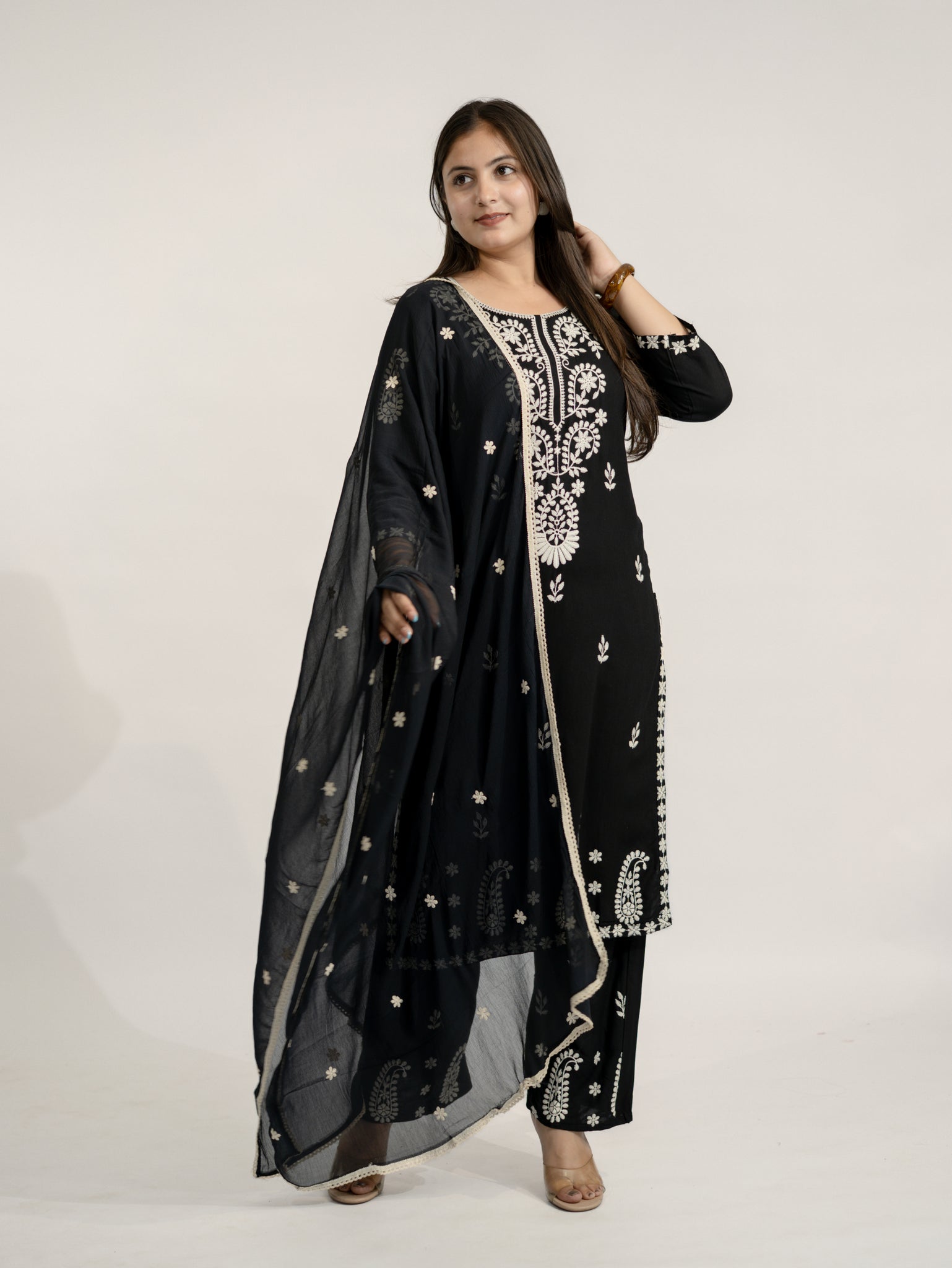
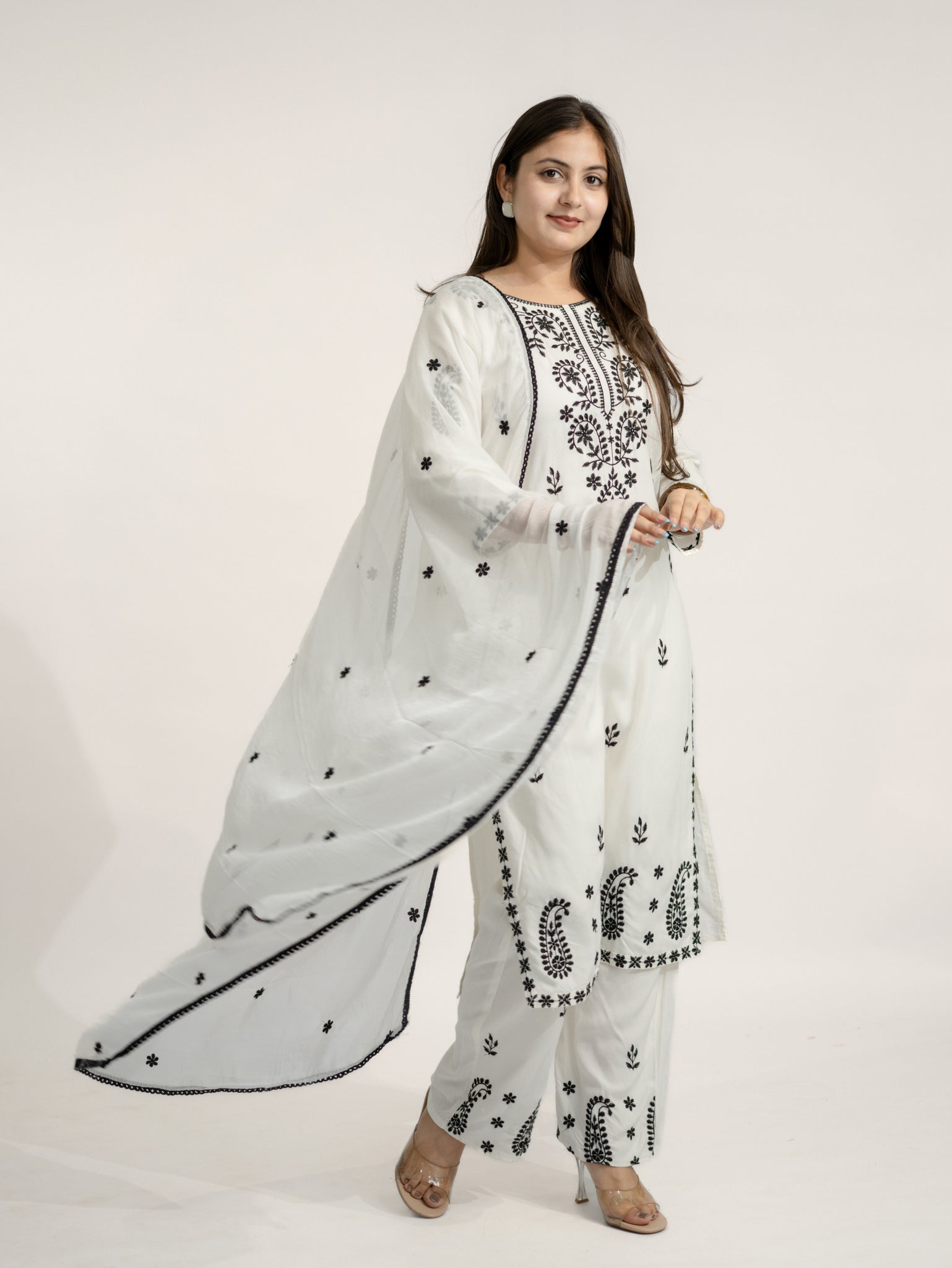
Chikankari is not just embroidery. It is one of India's most quietly powerful textile crafts, the kind that does not announce itself loudly but stays with you long after you have worn it.
Most people discover chikankari through a kurta they could not stop reaching for. The fabric feels right, the embroidery interestingly catches light, and there is something about it that cheaper garments simply cannot replicate. That something has a name, a history, and a set of techniques built over centuries.
If you have been shopping for a chikankari kurta for women in India and wondering what separates a genuine handcrafted piece from a machine-made copy, the answer is not just about price. It is about knowing exactly what you are looking at. Once you do, buying becomes a completely different experience, and you stop settling for imitations without even realising it.
What Is Chikankari?
Chikankari is a hand-embroidery technique originating from Lucknow, traditionally worked in white thread on soft, lightweight fabric. The stitches create a shadow-work effect that looks delicate up close and subtly luminous from a distance.
What makes it stand apart is its complexity. The craft uses over 32 individual stitch types, each with a specific name and placement on the cloth. A trained artisan spends years, sometimes a full decade, mastering them. What you wear is not just a garment. It is the result of an entire skill set, built entirely by hand.
The History of Chikankari Embroidery
Chikankari entered India's textile tradition during the Mughal period, with Noor Jahan often credited as one of its earliest patrons. It found a permanent home in Lucknow, where it became the city's most recognisable craft identity.
For generations, women artisans practiced this entirely by hand in small home-based workshops. That is why chikankari holds a place of real significance among Indian handicrafts. It is not just a technique. It is a livelihood passed down through families, stitch by careful stitch.
Authentic Chikankari vs Machine-Made: What to Look For
This is where most buyers go wrong. Understanding the difference between chikankari vs regular embroidery is simpler than it sounds once you know what to check.
Signs of genuine hand-embroidered Chikankari:
- The back of the fabric shows small, irregular knots. Machine embroidery looks neat on both sides.
- Stitch density shifts slightly across the piece. No two sections look identical.
- The thread sits gently raised against the cloth. It does not lie flat.
- Authentic pieces are worked on natural fabrics: cotton, muslin, georgette, or chanderi.
Machine-made versions replicate the look but lose the texture entirely. They do not drape the same. They do not age the same.
How to Style Chikankari This Season
Chikankari outfits for summer are one of the most practical wardrobe choices you can make in warmer months. The breathable embroidery and lightweight fabric work together naturally. A white-on-white cotton chikankari kurta with straight cotton pants is one of the cleanest looks of the season, requiring almost no effort to style.
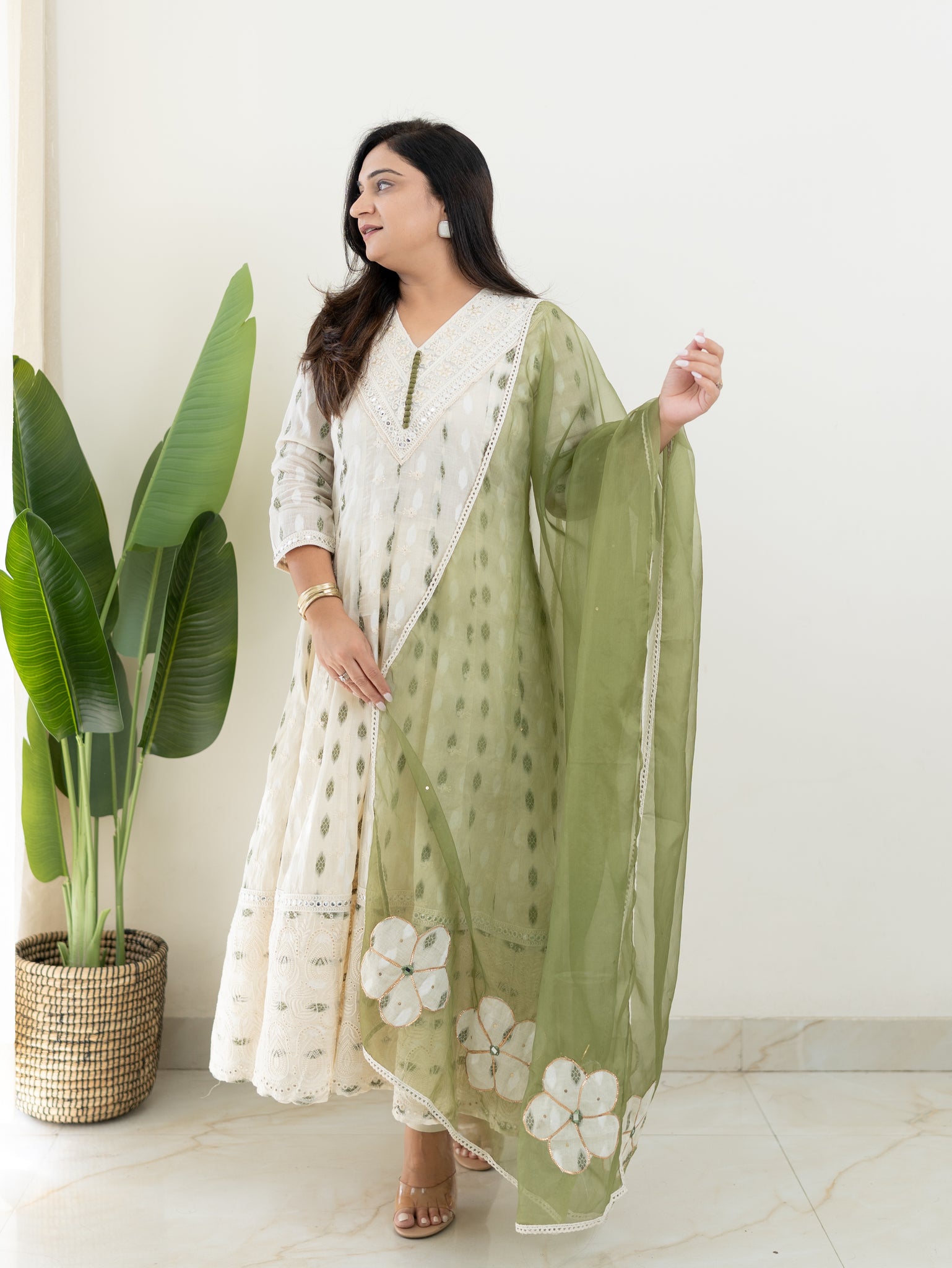
For evenings and festive settings, georgette or muslin sets in soft pinks, sage greens, or warm ivory read as effortlessly elegant without trying too hard.
Styling notes worth following:
- Keep accessories minimal. Small jhumkas and a bindi are enough.
- Kolhapuris or block heels pair better than heavier footwear.
- Let the embroidery do the work. Do not layer too many elements over it.
If you have been looking for Jaipur ethnic wear for women that genuinely celebrates craft over trend, chikankari belongs in your collection.
How to Care for Your Chikankari: A Simple Guide
Good chikankari fabric care is not complicated, but a few consistent habits make a real difference over time.
- Hand wash in cold water with a mild detergent.
- Do not soak for more than 15 minutes.
- Dry flat in shade. Direct sunlight fades natural dyes faster than you expect.
- Iron only on low heat, from the reverse side.
- Store folded with room to breathe. Do not compress under heavy clothing.
Naturally dyed pieces should be washed separately for the first two washes to prevent any colour transfer onto other garments.
Explore the full Chikankari collection at The Jaipur Studio and find pieces that are worth keeping, wearing, and passing on.
Frequently Asked Questions
Q. Is chikankari only available in white thread?
No, contemporary chikankari also uses pastels and jewel-toned threads, though white-on-white remains the most traditional and widely practiced form.
Q. Does chikankari shrink after the first wash?
Cotton chikankari can shrink slightly, so always pick a size with a little room and avoid hot water when washing.
Q. Which chikankari stitch is the hardest to master?
The Murri stitch, a tiny rice-shaped knot, is widely considered one of the most difficult to execute with consistency and is a mark of skilled handwork.
Q. Can chikankari be worn year-round?
Yes, the fabric decides the season: cotton for summer, georgette or muslin for cooler evenings and festive occasions.
Q. Is Lucknawi chikankari different from chikankari made elsewhere?
Authentic Lucknawi chikankari uses traditional stitches passed down through generations, while versions produced elsewhere often rely on machine embroidery that mimics the look without the craft.