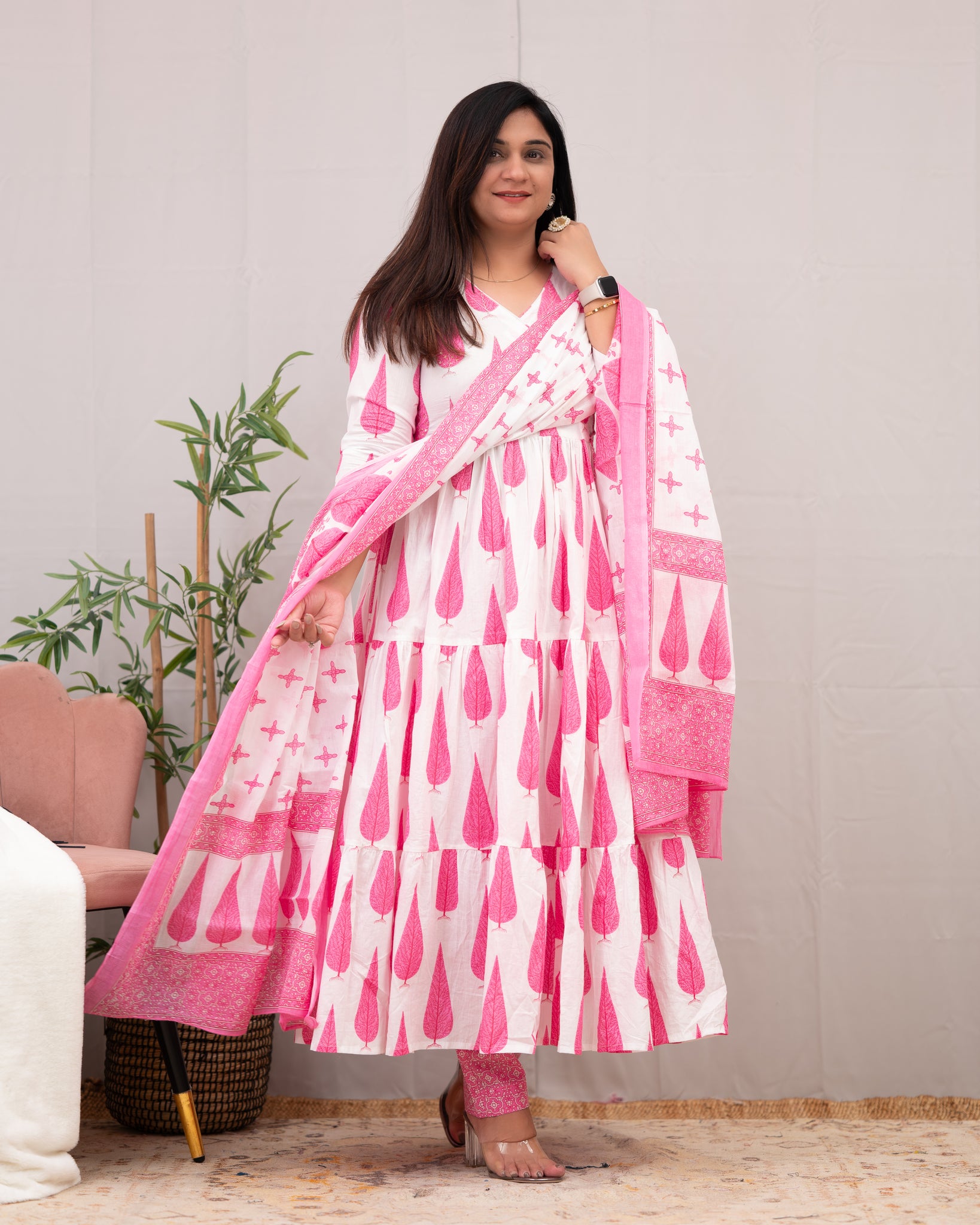
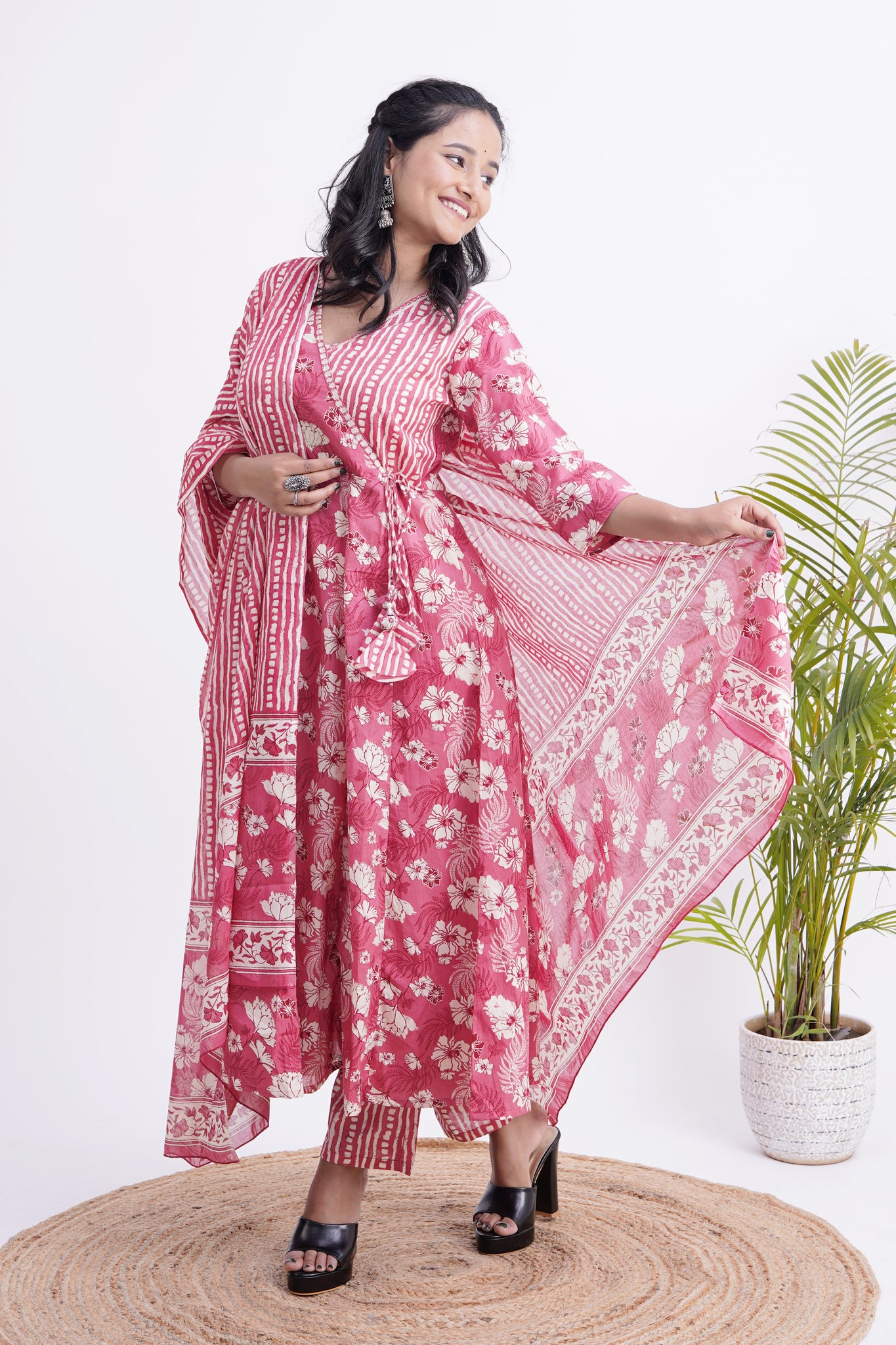
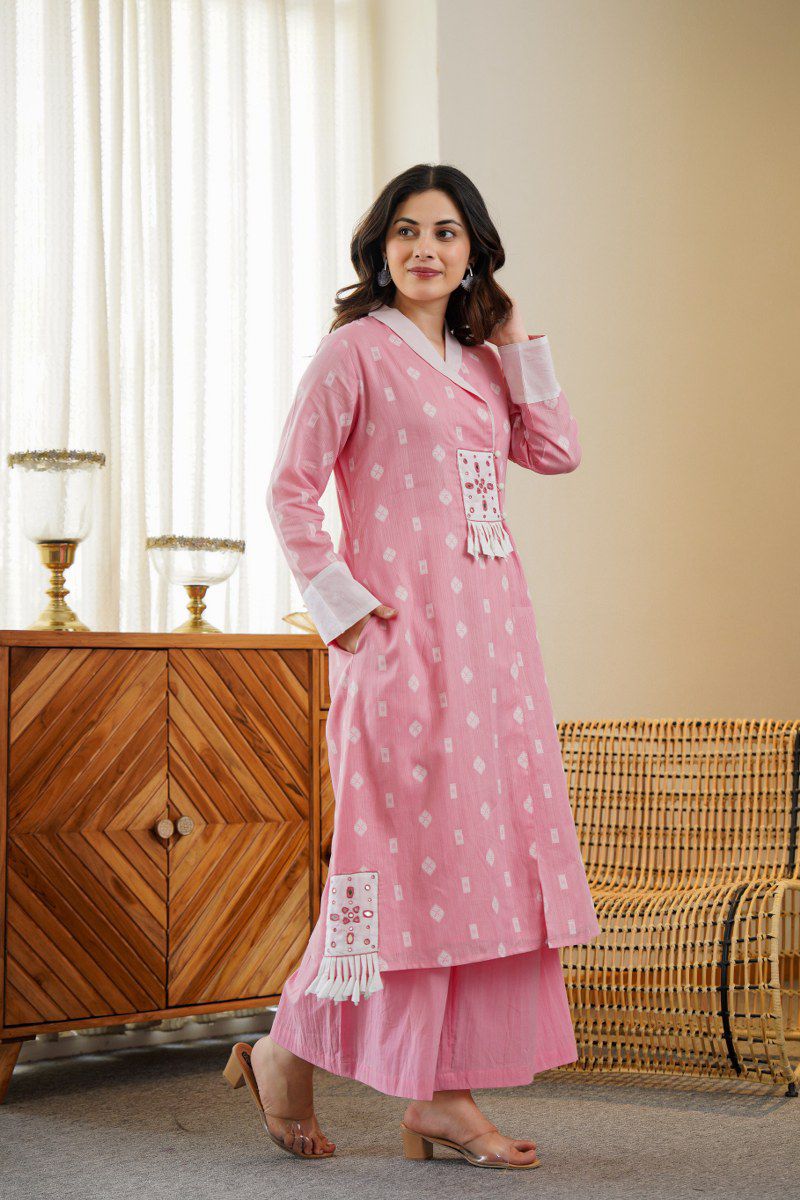
Angrakha kurta for women in India is a traditional top with a wrap-style front that overlaps and ties at the side, instead of buttoning down the middle like a regular kurta. This royal-era design is now one of the most searched styles in women's ethnic wear in India, thanks to its flowy fit, flattering wrap, and rich Jaipur craftsmanship.
Quick takeaway: An angrakha kurta has a wrap-and-tie front instead of a straight buttoned placket. It flatters most body types, works in both cotton and festive fabrics, and is trending in 2026 thanks to comfort-first fashion and renewed love for handcrafted, heritage clothing.
What Is Angrakha Style
Angrakha style features a front overlap that wraps across the body and ties at the side, usually with strings or a fabric belt. A regular kurta has a straight front with a center placket, while an angrakha kurta has flared panels that cross over each other. This creates a layered look that flatters most body types and adds movement as you walk.
History of Angrakha
The angrakha has deep roots in royal Rajasthan. Rajput nobles and Mughal courtiers once wore it as a sign of status and comfort. The wrap design allowed easy movement, which suited the hot Rajasthan climate. Artisans used hand block printing, Ajrakh, and Bandhani work to turn simple cloth into wearable art. That same craft lives on today in angrakha kurtas made by skilled Jaipur artisans.
Why Trending in 2026
The Angrakha trend 2026 is growing for a few clear reasons. Comfort-driven fashion is in demand, and the loose wrap silhouette delivers exactly that. Sustainable, handcrafted clothing is also winning over shoppers who want quality over mass production. Add to that social media bringing heritage styles back into view, and younger buyers are rediscovering this look. A cotton kurta for women in angrakha style checks every box: breathable, easy to style, and rooted in real craftsmanship.
As more women embrace heritage-inspired fashion, now is the perfect time to shop angrakha styles at The Jaipur Studio. Each piece is handcrafted by Jaipur artisans, blending traditional techniques with silhouettes designed for modern wardrobes.
How to Style
An angrakha style kurta is one of the most versatile pieces in ethnic wear.
- Pair it with straight pants or palazzos for a relaxed daytime look.
- Choose a kurta pant set for women for a coordinated festive outfit.
- Add a dupatta for weddings or pooja days.
- Keep jewellery minimal with cotton, or go bold with silk and embroidered versions.
- Layer with a jacket during cooler months.
Who Should Wear It
The angrakha kurta suits nearly everyone. The wrap front skims the body without clinging, making it ideal for women who want comfortable, non-restrictive clothing. It works across age groups too, from college students wanting a fresh ethnic look, to working women who need office-friendly comfort, to anyone exploring Jaipur ethnic wear for festive occasions.
FAQs
Q. Does angrakha style suit curvy or plus-size body types?
Yes. The wrap front and flared panels skim the body instead of clinging, making it flattering for fuller figures.
Q. What should I wear under an angrakha kurta?
Most are paired with straight pants, palazzos, or churidars, along with a slip or camisole underneath for coverage.
Q. Angrakha vs regular kurta: which is better for daily wear?
A regular kurta is quicker for everyday wear since there's no tying involved. An angrakha kurta takes a little more effort but gives a more elevated look.
Q. How do I wash an angrakha kurta?
Cotton versions can usually be hand-washed or gently machine-washed in cold water. Embroidered or silk versions are best dry-cleaned.
Q. Is angrakha style only for festivals?
No. Lightweight cotton versions suit daily wear, while embroidered or silk versions are better for festive days.
Handcrafted for Every Occasion
For everyday wear or your next celebration, shop angrakha styles at The Jaipur Studio, each handcrafted by Jaipur's artisans.