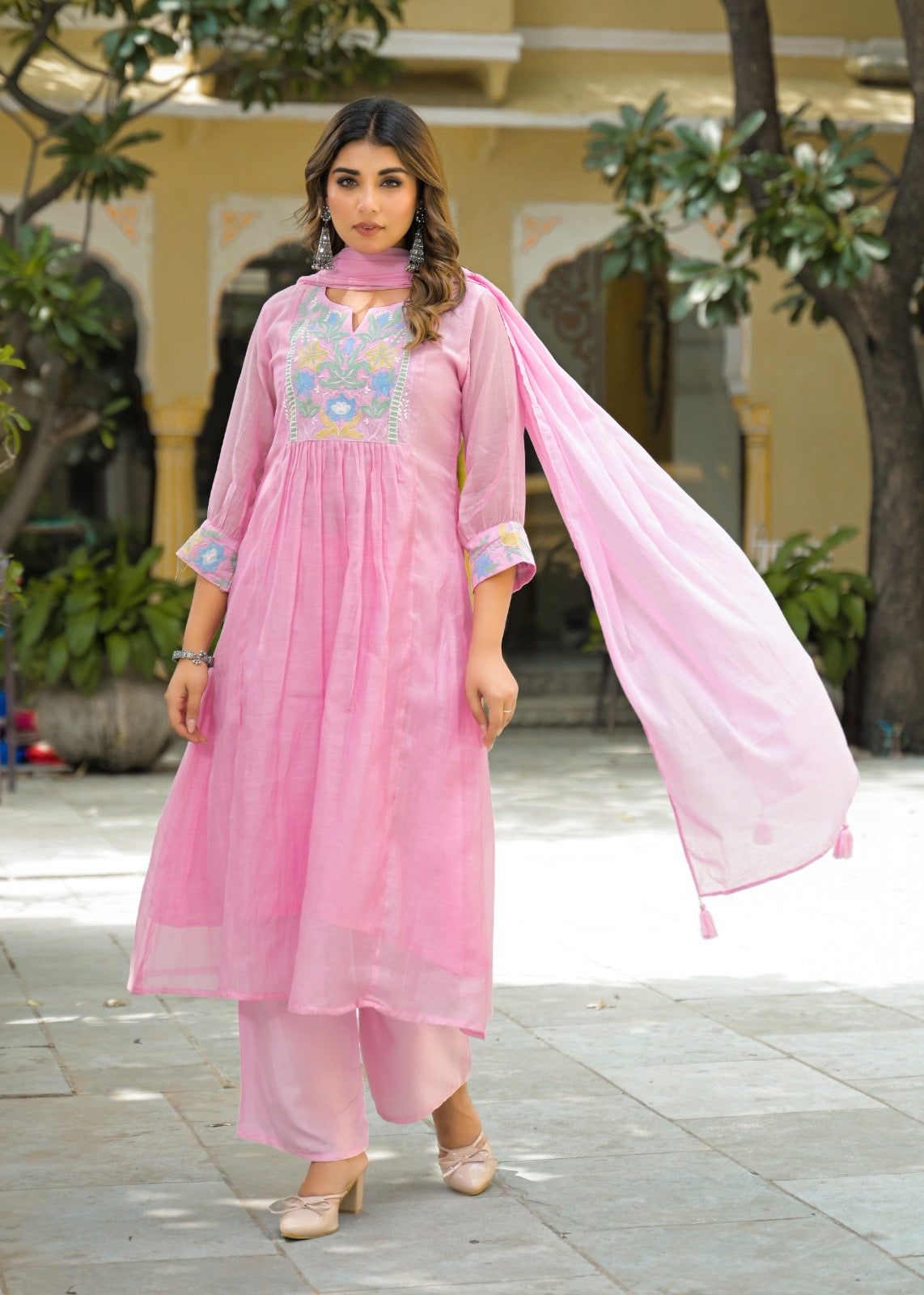
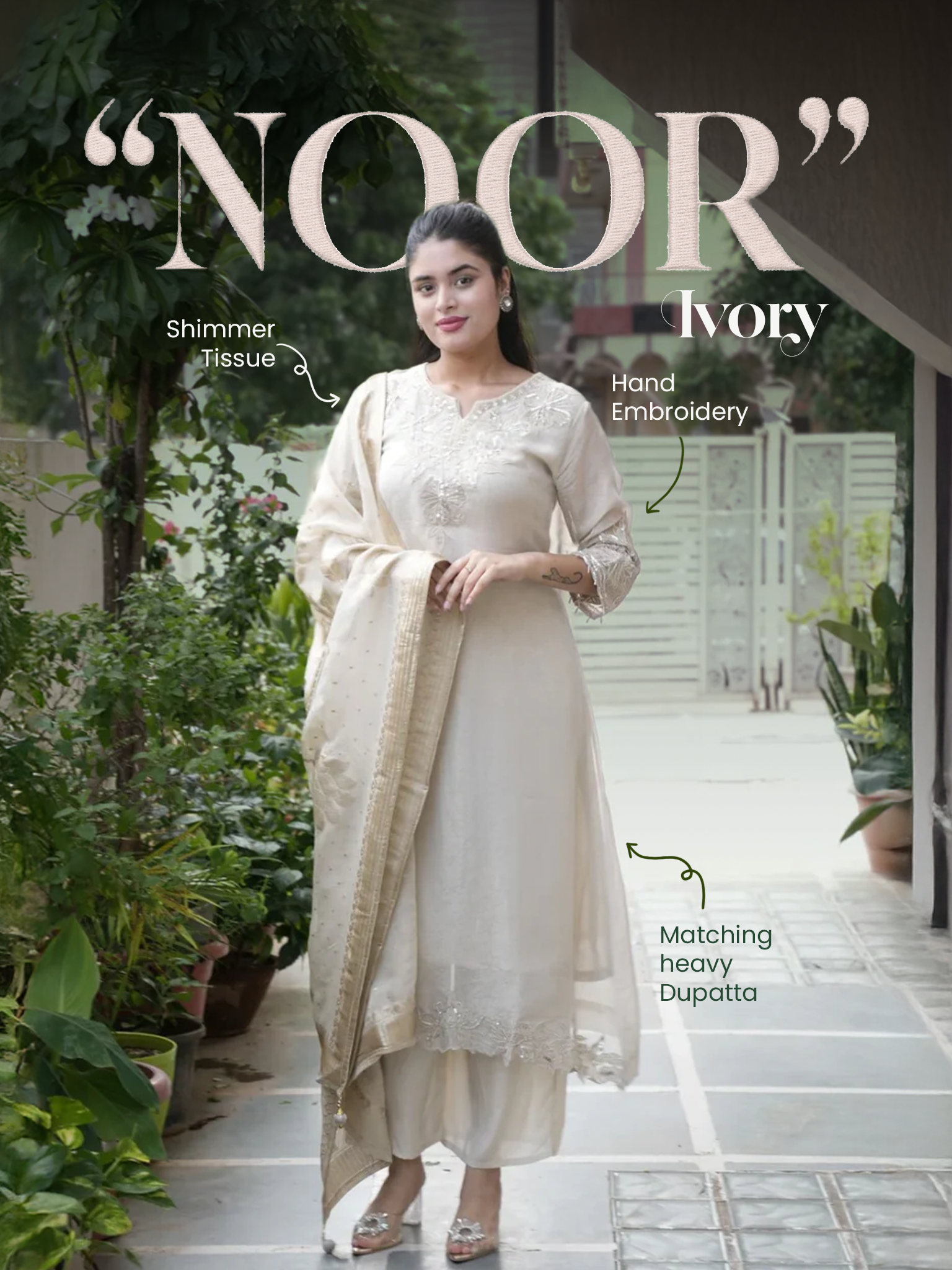
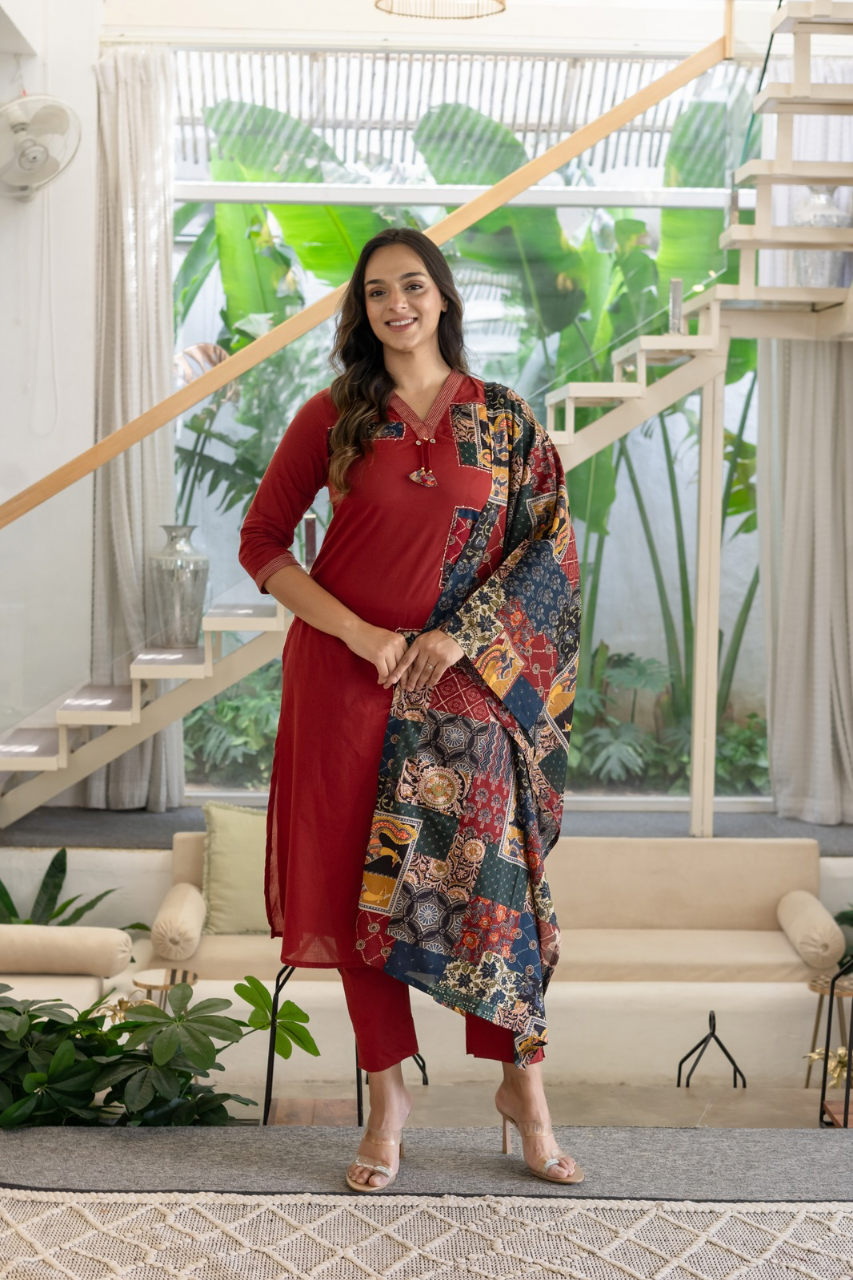
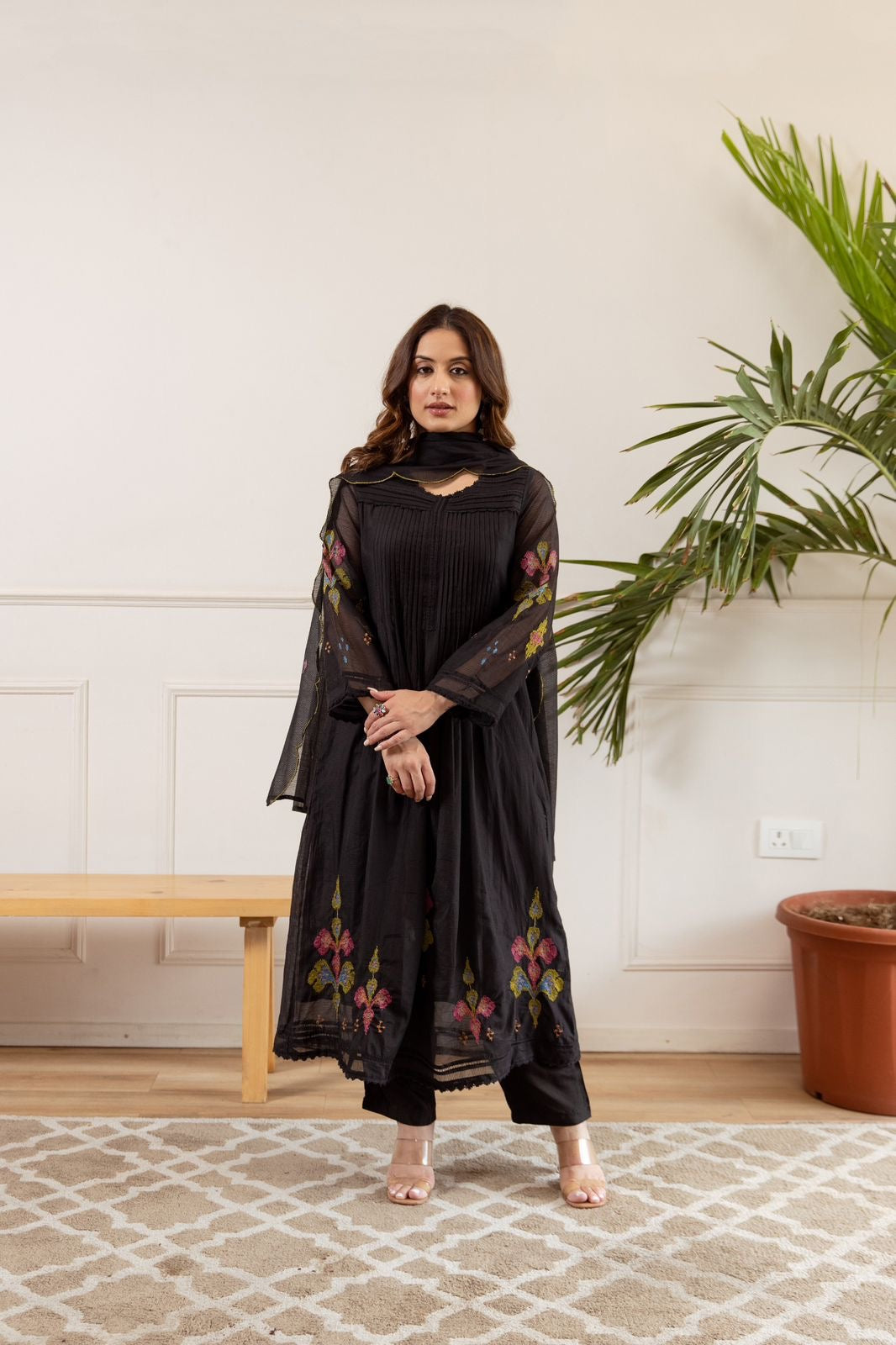
Jaipur has always meant more than forts and festivals. For anyone drawn to Jaipur's ethnic wear for women that is rooted in genuine craft, this city has always been the answer. Built on natural dyes and carried forward by artisans who have been doing this for centuries, Jaipur ethnic wear stands apart from anything the fast fashion market can offer.
This guide covers the full picture: the heritage, the crafts, the silhouettes, and exactly what to look for when buying the real thing.
Quick takeaways
- Authentic Jaipur ethnic wear is hand-block printed or hand-tied, never machine-perfect
- Ajrakh, Bandhani, Leheriya, and Kalamkari are the four signature Rajasthani crafts to know before you shop
- Natural dyes (indigo, madder, mustard) actually get softer and richer with every wash
- The easiest place to start a Jaipur wardrobe is a kurta-pant set in Mul Cotton
- Look for named fabric, named craft, and visible print irregularities. That's how you spot the real thing
Jaipur's Textile Heritage: Where Rajasthani Craft Truly Begins
Jaipur is one of the oldest active textile centres in South Asia. The city's artisan communities have been working with carved wooden blocks and plant-based dyes for over 400 years.
What makes Jaipur different is the density of craft knowledge concentrated in one place. Ajrakh printers, Bandhani tiers, Leheriya dyers, and Kalamkari painters have coexisted here for generations. The knowledge does not transfer through institutions. It moves through families, through apprenticeships, through decades of muscle memory.
This is why a genuine piece from this city carries something a machine-made print simply cannot replicate. You are not just buying a kurta. You are wearing a tradition.
Why Women Keep Coming Back to Jaipur Fashion
There is a specific quality to Jaipur fashion that women who know craft keep coming back to. It is not just the print on the surface. It is the way natural dye fabric feels against the skin in summer heat, and the way colours soften and deepen after every wash instead of fading out.
Jaipur pieces were never designed to be worn once and discarded. They were made to live in a wardrobe for years.
What separates authentic Jaipur craft from fast fashion:
- Slight variations in the print repeat (a mark of hand-blocking, not a defect)
- Colour that penetrates through to the reverse side of the cloth
- Natural dye tones: deep indigo, madder red, earthy mustard, pomegranate black
- Fabric that gets softer and more breathable with each wash
This is what handcrafted ethnic wear for women from Jaipur actually delivers: clothing that rewards you for paying attention.
Rajasthani Craft Traditions Every Jaipur Shopper Should Know
Ajrakh: One of the oldest resist-print techniques in South Asia. Ajrakh goes through up to 16 stages of washing, printing, and natural dyeing. The signature geometric patterns in indigo and madder red are immediately recognisable and deeply connected to the Jaipur artisans who have preserved the craft for generations. Browse the Ajrakh collection to see the print up close.
Bandhani: India's original tie-dye, has been practised in Rajasthan for over 5,000 years. Tiny sections of fabric are tied by hand before dyeing, creating dot patterns that shift and shimmer in different lights. A Bandhani dupatta can carry thousands of individual hand-tied points and still weigh almost nothing.
Leheriya: A diagonal wave-stripe technique that is quintessentially Rajasthani. Usually done on lighter fabrics, Leheriya is festive in spirit and recognisably Jaipur in character.
Kalamkari: A hand-drawn or block-printed art form with flowing floral motifs, bold black outlines, and earthy natural dye colours. A Kalamkari kurta is one of the most wearable expressions of this craft, moving from daily wear to festive occasions with minimal styling.
Building a Jaipur Ethnic Wardrobe: Silhouettes That Work
You do not need to build it all at once. A few well-chosen pieces cover most occasions.
The most practical starting point is a kurta pant set in Mul Cotton or Muslin. A complete look with no styling effort, it moves from office to evening without being rethought. Choose an A-line or straight silhouette in Ajrakh or Kalamkari for maximum versatility.
From there, a cotton dress in a hand-block Jaipuri print handles relaxed days with ease. These two pieces alone cover most of your week, and both are crafts that hold their quality across years of regular wear.
For festive months, a dupatta set in Bandhani or Kota Doria adds occasion-wear without straying from the same craft language. The rest of the wardrobe fills in naturally from here, one craft piece at a time.
How to Spot Authentic Jaipur Ethnic Wear
The market is full of machine-made prints sold under the label of "Jaipur craft" or "Rajasthani block print." Whether you are shopping for everyday sets or kaftans, the same authenticity markers apply across every category. Here is how to tell the real thing from an imitation.
Check for these signs:
-
Named fabrics: Pure cotton, Mul Cotton, Kota Doria, Chanderi, Mashru Silk. Vague "cotton blend" descriptions without specifics are a flag.
-
Named craft technique: If a brand cannot tell you whether a piece is Ajrakh, Bandhani, or Kalamkari, they probably do not know.
-
Print imperfections: Genuine hand-block prints have subtle irregularities. Machine prints are unnaturally perfect.
-
Brand heritage: A documented history with Jaipur's artisan community signals real accountability. A 1950 legacy is not something you make up.
Frequently Asked Questions
Q. What is the difference between Ajrakh and Bandhani?
Ajrakh is a resist block-print technique using carved wooden blocks and natural dyes, creating geometric patterns in indigo and madder red. Bandhani is a tie-dye technique where fabric is tied by hand before dyeing, creating small dot patterns. Both are Rajasthani crafts, but the process and the final look are completely different.
Q. Is hand-block printed cotton good for everyday wear in India?
Yes. Hand-block printed cotton, especially Mul Cotton and Muslin, is breathable and gets softer with every wash, which makes it well-suited to Indian summers and daily wear.
Q. What is Mul cotton, and how is it different from regular cotton?
Mul cotton is a finer, more lightweight weave of cotton, originally developed in India for hot, humid weather. It drapes softly and feels airier on the skin compared to standard cotton, which is why it's commonly used in Jaipur kurta and dress sets.
Q. How do you wash and care for natural dye ethnic wear?
Hand wash or use a gentle machine cycle in cold water, and wash darker colours separately for the first few washes. Avoid harsh detergents and direct sun-drying, as this helps the natural dye deepen in colour over time instead of fading.
Q. Can Jaipur ethnic wear be worn to the office or formal settings?
Yes. Straight-cut kurta sets and pant sets in subtle Ajrakh or Kalamkari prints work well for office wear, especially in neutral tones like indigo, beige, and earthy mustard.
Q. How long does delivery take for orders placed at The Jaipur Studio?
Orders are typically dispatched within 2 to 3 business days and delivered within 5 to 7 working days across India.
The Jaipur Studio: A 1950 Legacy, Still Crafting
The Jaipur Studio has been part of Jaipur's textile story since 1950. That is not a marketing number. It means multiple generations of relationships with the Jaipur artisans who actually make the craft happen.
Every piece in the collection traces back to those relationships: Ajrakh cotton kurta sets, Kalamkari pant sets, Bandhani dupatta sets, hand-painted coord sets, block-print short tops, and pant-plazo sets, all made with full transparency about fabric and technique.
The community has grown to 566K+ women who chose craft over convenience. Sizes range from 38 to 56, with a dedicated Plus Size Store. COD is available, and free shipping applies to all orders above Rs. 1,500.
If this is the kind of craft you've been looking for, the full collection is worth a slow browse because some things are worth wearing, keeping, and passing on.