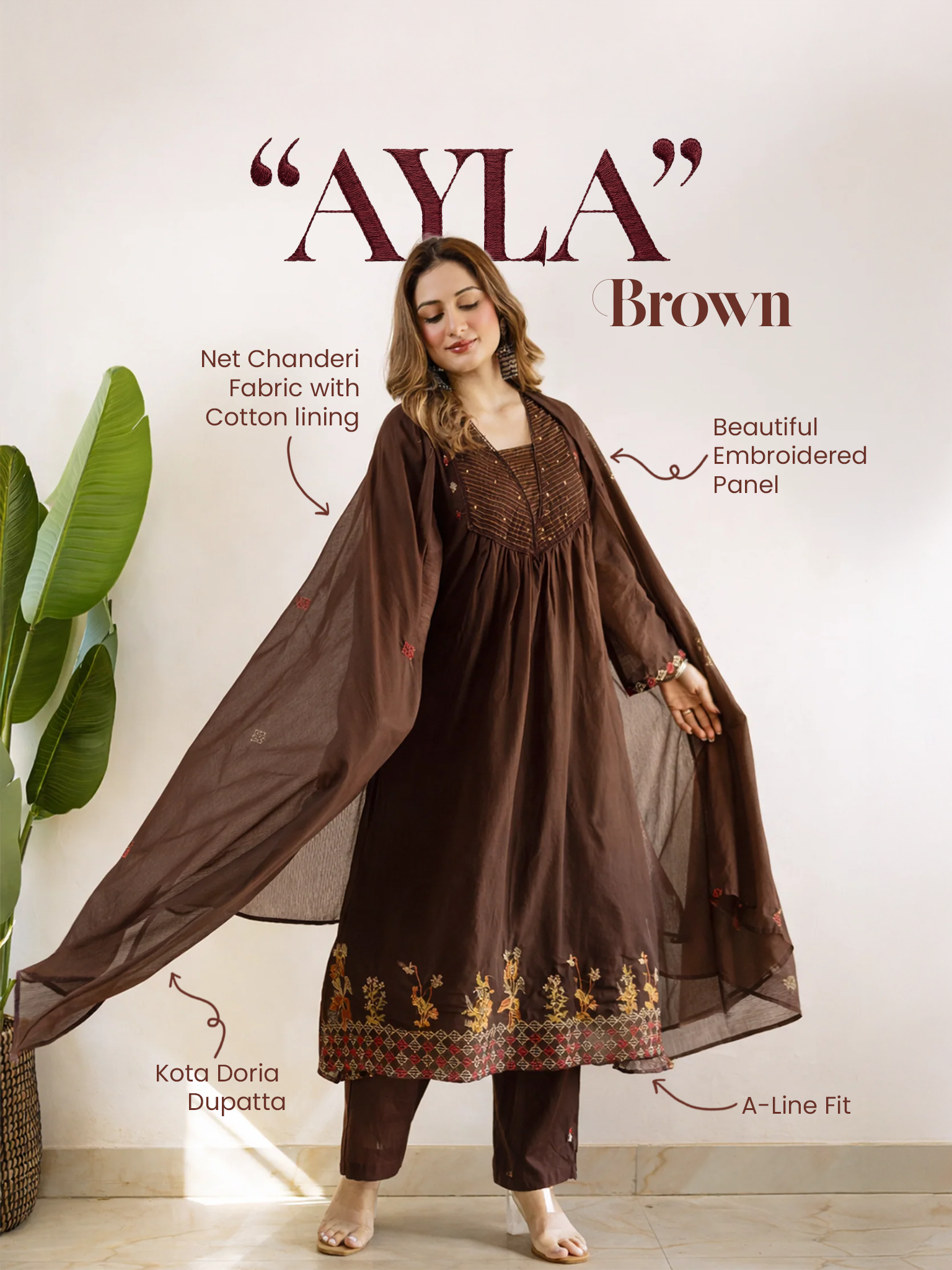
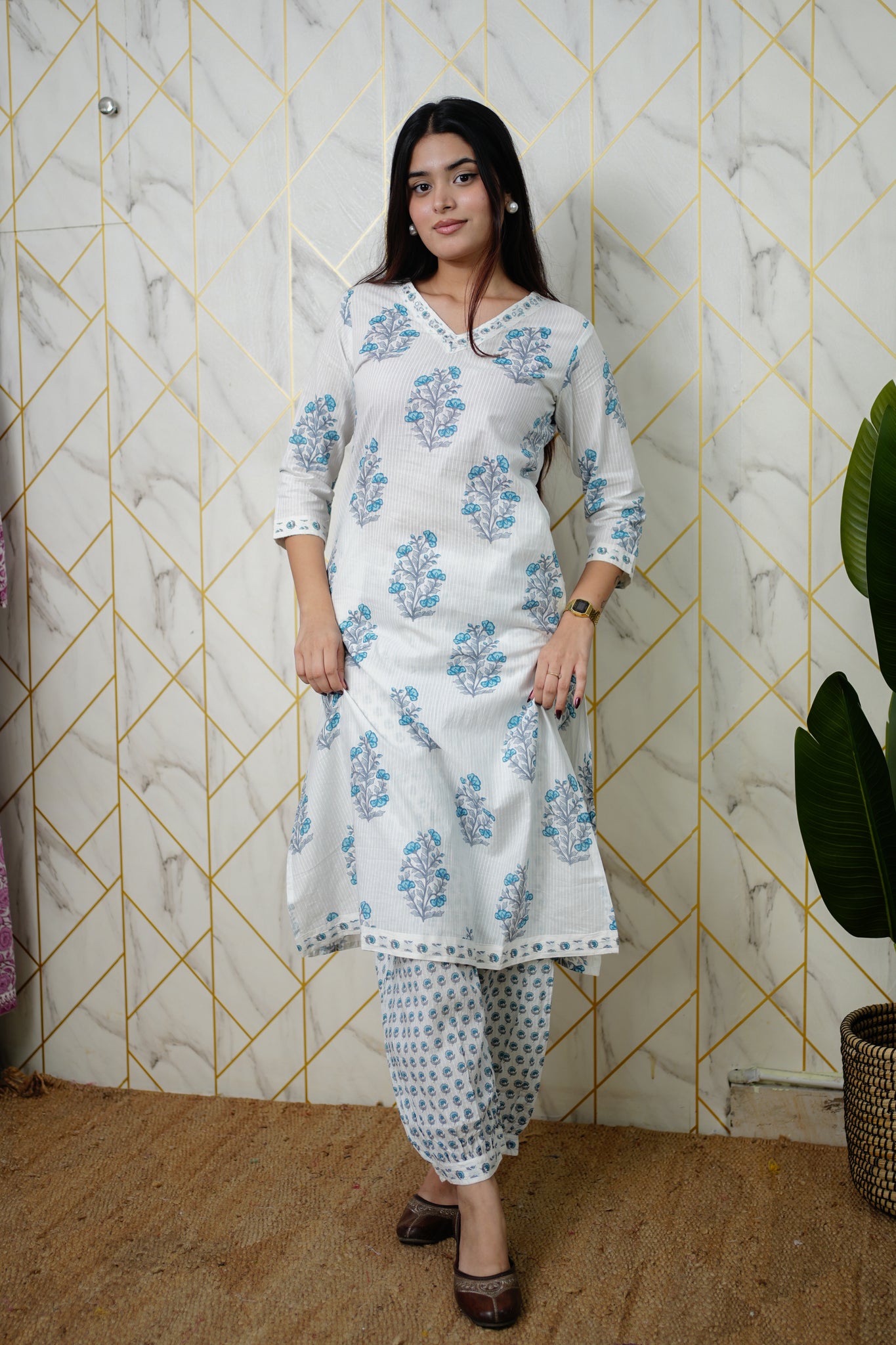
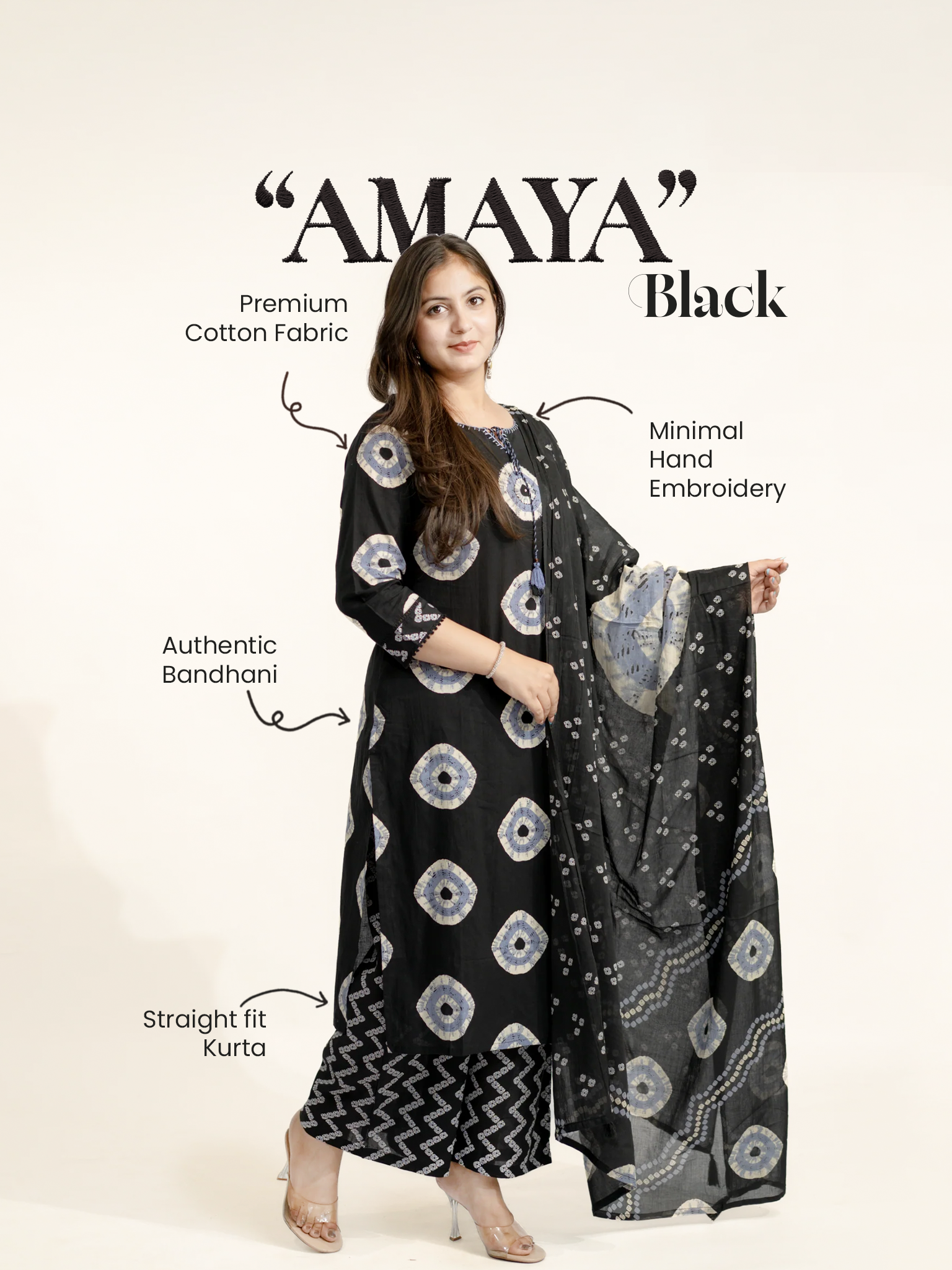
There is something about a Bandhani kurta that stops you mid-scroll. The tiny dots, the rich burst of colour, the way the pattern seems to ripple across the fabric like water. If you have ever worn one or gifted one, you already know the feeling. But most of us do not know the story behind those dots.
This blog is for every woman in India who loves her Bandhani kurta but wants to understand what she is actually wearing. Because once you know, you will never look at it the same way again.
1. What Is Bandhani Print? (The Short Answer Worth Knowing)
Bandhani print is a traditional Indian resist-dyeing technique where fabric is tied at thousands of tiny points with thread before being dipped in dye. When the thread is removed, those tied points remain undyed, creating the characteristic dotted or circular patterns across the cloth. The word "Bandhani" comes from the Sanskrit word bandhan, meaning "to tie."
This is not printing in the conventional sense. There is no block, no screen, no digital machine involved. Every dot you see on a Bandhani fabric was tied by hand, one by one, by a skilled artisan. That is what makes it extraordinary.
2. The History of Bandhani in Rajasthan
Bandhani is believed to be over 5,000 years old. Archaeological evidence from the Indus Valley Civilisation suggests that tie-dye techniques were practised even then. But it is in Rajasthan and Gujarat that Bandhani truly became an art form passed down through generations.
In Rajasthan, the craft is deeply woven into the culture of the Khatri community, who have been its primary practitioners for centuries. Cities like Jaipur, Jodhpur, Bikaner, and Sikar became known centres of Bandhani production, each with its own regional colour palettes and pattern styles.
For Rajasthani women, wearing Bandhani was not just about fashion. A Bandhani odhni (dupatta) was considered auspicious and was a staple at weddings, festivals, and celebrations. Red Bandhani was traditionally gifted to brides. The craft held social and emotional significance long before it became a global aesthetic.
3. How Bandhani Fabric Is Actually Made
Understanding the making process is what separates someone who wears Bandhani from someone who truly appreciates it.
Step 1: Fabric Selection. The base fabric is chosen first. Cotton, silk, and Kota Doria are the most common choices. Cotton Bandhani is breathable and perfect for everyday wear, while silk Bandhani carries a festive richness.
Step 2: The Tying. This is the heart of the craft. Artisans, often women working from home as part of a generational trade, use their fingernails to pinch tiny points of fabric and tie them tightly with waxed thread. A single saree can have anywhere from 25,000 to over 1,00,000 tie points, depending on the complexity of the design.
Step 3: The Dyeing. Once tied, the fabric is dipped into natural or reactive dyes. For multi-coloured patterns, the fabric goes through multiple dye baths, with different points tied and released each time. This layering is what creates the depth of colour in traditional Bandhani.
Step 4: The Reveal. After dyeing and drying, the threads are carefully removed. This moment of unfolding is called khulna, and it is, by all accounts, magical. The pattern that emerges is never perfectly symmetrical, which is part of what makes each piece unique.
4. The Patterns and What They Mean
Different Bandhani patterns have different names and cultural associations. A few you will commonly find in a Jaipur collection:
-
Shikari - Small dots arranged in rows, the most classic Bandhani pattern
-
Ekdali - A single large circle, often seen in bridal odhnis
-
Tikunthi - Three dots arranged in a triangle
-
Chaubundi - Four dots, representing balance and symmetry
-
Laddu Jalebi - A festive, joyful pattern that mimics the shape of sweets
When you shop for Indian block print fabrics or handcrafted textiles, knowing these names helps you ask the right questions and pick pieces that carry real intention.
5. How to Style a Bandhani Kurta Set
A Bandhani kurta is one of the most versatile pieces you can own. Here is how to wear it across different occasions:
For Everyday Wear
Pair a cotton Bandhani kurta with straight palazzo pants or a simple Afghani set. Stick to one bold colour from the print for your footwear. Kolhapuris in tan or earthy red work beautifully.
For Festive Occasions
Go for a Bandhani kurta set in red, mustard, or deep green. Layer with a contrasting dupatta, statement jhumkas, and a potli bag. If your print is loud, keep your accessories understated.
For Casual Outings
A lightweight mul cotton Bandhani coord set with flats is one of the easiest outfits to put together. The print does all the heavy lifting; you just have to show up.
Colour Pairings That Always Work
-
Red Bandhani with ivory or gold accessories
-
Blue Bandhani with silver jewellery and white pants
-
Mustard Bandhani with terracotta tones and wooden accessories
-
Black Bandhani with minimal gold jewellery for a modern take
If you are exploring Jaipuri bandhani kurti options, look for pieces that pair traditional print with clean, contemporary cuts. That balance is exactly what makes the style feel fresh without losing its roots.
6. Why Buying Bandhani Is an Act of Preservation
Here is something worth sitting with: the Bandhani artisan community has faced serious pressure from machine-made imitations. What is sold as "Bandhani print" in many fast-fashion stores is a digital or screen print of the Bandhani pattern, not the real thing.
Real Bandhani has texture. When you run your finger across it, you can feel the slight puckering where the fabric was tied. That is the mark of the handmade.
When you buy authentic Bandhani, you are not just getting a beautiful kurta. You are sustaining a craft, supporting an artisan family, and keeping a 5,000-year-old tradition alive. That is worth knowing before your next purchase.
Looking for a Bandhani kurta set online? Browse The Jaipur Studio's handcrafted Bandhani collection, sourced directly from artisans in Jaipur.
7. How to Care for Your Bandhani Fabric
Bandhani requires a little extra love, especially in the first few washes.
-
First wash: Hand wash separately in cold water. Some colour bleeding is normal for authentic, naturally dyed Bandhani and is not a defect
-
Detergent: Use a mild, pH-neutral detergent. Avoid harsh chemicals
-
Soaking: Do not soak for extended periods as this can affect the dye
-
Drying: Always dry in shade. Direct sunlight can fade the colours faster
-
Ironing: Iron on a low-medium setting, preferably on the reverse side
After the first two or three washes, the colour stabilises beautifully, and the fabric becomes even softer. Bandhani fabric only gets better with time.
8. Frequently Asked Questions
Q1. What is Bandhani print and how is it different from regular prints?
Bandhani print is created by tying thousands of tiny points on fabric with thread before dyeing. Unlike screen or block prints that sit on top of the fabric surface, Bandhani creates a pattern through resistance, meaning the undyed areas form the design. The result has a distinct three-dimensional texture that printed imitations cannot replicate.
Q2. Is Bandhani fabric good for Indian summers?
Yes, especially when the base fabric is cotton or mul cotton. Bandhani on cotton is lightweight, breathable, and comfortable in India's heat. Avoid Bandhani on heavier synthetic blends if you are looking for summer-friendly options.
Q3. How do I know if a Bandhani piece is authentic or machine-made?
Feel the fabric. Authentic Bandhani has a slight puckering or crinkle texture where the points were tied. Machine-made or printed Bandhani will feel flat and smooth. You can also hold it up to the light: the tied areas in real Bandhani often let through slightly more light due to the density of the tie points.
Q4. Can I wear Bandhani for weddings and formal occasions?
Absolutely. Bandhani on silk, Kota Doria, or Chanderi is a classic choice for weddings and festive events. In Rajasthan, red Bandhani is traditionally considered auspicious and has been gifted to brides for centuries. A well-chosen Bandhani kurta set can be just as elegant as any embroidered outfit.
Q5. Where can I find authentic Bandhani kurta sets online?
Look for brands that source directly from Jaipur artisans and are transparent about their craft process. Check for fabric composition on product pages, read customer reviews, and look for the slight texture detail in product photos that indicates genuine handcrafted Bandhani. The Jaipur Studio's Bandhani collection is a good place to start if you want authentic craft at honest prices.